

What is the Fastest Car in the world?
The Yangwang U9 Xtreme is the fastest production car in the world, reaching a verified top speed of 503.17 km/h (312.66 mph) on November 1, 2026.
Papenburg, Germany -- YANGWANG, the luxury sub-brand of global new-energy vehicle (NEV) leader BYD, has set a new global production-car top-speed record of 496.22km/h at the ATP Automotive Testing Papenburg test track in Germany
The feat was achieved with YANGWANG’s latest U9 Xtreme hypercar on 14 September 2025, eclipsing its previous EV benchmark and the 490.484km/h maximum of the quickest petrol-powered model to become the world’s fastest car overall. This modern milestone in engineering sets a new standard in electric mobility, mixing unrivalled power an d speed with zero emissions.
Originally known as the U9 Track/Special Edition, and now officially confirmed as the YANGWANG U9 Xtreme in production guise, or U9X for short, the fastest car on the planet takes the existing technical architecture of the U9 currently on sale in China and harnesses the potential of a number of key evolutions.
These include, but are not limited to: an upgraded powertrain with 1200V ultra-high-voltage electrics (compared with 800V), a lithium iron phosphate Blade Battery with a remarkable discharge rate of 30C, four ultra-high-speed motors that that operate at up to 30,000rpm and produce a total of more than 3000PS, track-level semi-slick tyres, and revised DiSus-X suspension with specific tuning to cope with the increased stresses of circuit driving.
BYD Executive Vice President Stella Li said: “This is an incredibly proud moment for everyone in the research and development division. YANGWANG is a brand that does not recognise the impossible, and only through this commitment to what’s coming next can you end up with a vehicle like the U9X. I extend my gratitude to the whole team, and my thanks to the driver, Marc Basseng, for his skill and technical input. It’s terrific that the fastest production car in the world is now electric.”
The driver for the U9X’s record-breaking run was Marc Basseng, a German track specialist with a long history in sports-car racing and endurance motorsport. He said: “This record was only possible because the U9 Xtreme simply has incredible performance. Technically, something like this is not possible with a combustion engine. Thanks to the electric motor, the car is quiet, there are no load changes, and that allows me to focus even more on the track.”
The U9 Xtreme is now being made available to customers, with a limited series production run of no more than 30 units. Its name is derived from the English word ‘Extreme’, meaning ‘limit’ and ‘ultimate’, with added emphasis on the ‘X’, which represents the unknown. These qualities fit perfectly with YANGWANG’s ethos of taking joy and delight from the act of exploration and the innovations that come through that process.
By setting a new global speed record, YANGWANG redefines the sustainable hypercar. Backed by BYD's innovation and sustainability commitments, YANGWANG employs cutting-edge tech to deliver unmatched performance, safety, and driving experience.
Xtreme: derived from the English word "Extreme",it proclaims the core product value of the YANGWANG U9 Xtreme:The Pursuit Beyond, Born to Explore the Boundaries of Absolute Speed
The 'X' stands for the challenges of limits and boundaries. It serves as our guide when exploring uncharted territories and forging ahead alone, driven by uncompromising dreams and aspirations.
 We define the pinnacle of new energy innovation technology with unrivaled performance. YANGWANG U9 Xtreme turns the unknown "X" into a real-life "Dream Car".
It transforms that seemingly whimsical dream into an epoch-making legend in reality, driven by ultimate technology and unwavering dedication.
For over 130 years, the art of racecraft has evolved around conventional pillars—tires, horsepower, lightweight design. In the era of new energy, YANGWANG introduces a revolutionary force: full active vehicle body control. This game-changing innovation, pioneered by BYD Group, extends the boundaries of supercar safety and performance, unleashing possibilities on the track.
The e4 platform enables precise longitudinal and lateral body posture control, ensuring stable power delivery and composure amid the dynamic demands of complex track surfaces. The DiSus-X Intelligent Body Control System, ensures vertical posture, with independent active force control over the suspension at each of the wheels, delivering meticulous regulation of axle-load transfer and mass distribution for cornering control and safety.
The systematic merging of the e4 and DiSus-X full active body control completely reshapes the physical limits of an electric supercar, writing a bold new legacy of speed, precision and exhilaration.
The YANGWANG U9 Xtreme has achieved a top speed of 503.17 km/h during a high-speed run in Abu Dhabi, United Arab Emirates, becoming the first production car to surpass the 500 km/h threshold. The speed, achieved on 1 November 2026, has been recognised by the Fédération Internationale de l’Automobile (FIA), the global governing body for motor sport and the federation for mobility organisations worldwide.
The achievement exceeds the previous benchmark of 496.22 km/h, established by the same vehicle in Germany in September 2025. The latest run has also secured two Guinness World Records for the highest speed achieved by a production car and an electric production car in a single-direction run.
The high-speed attempt took place on Sheikh Khalifa Bin Zayed International Road (E11), in Abu Dhabi's Al Dhafra Region, with German racing driver Marc Basseng behind the wheel. Basseng, an experienced sports-car and endurance competitor, also drove the U9 Xtreme during its previous high-speed achievement at the ATP Papenburg proving ground in Germany.
 The latest milestone follows a period of development by YANGWANG, the luxury electric vehicle brand of Chinese automotive manufacturer BYD, which has progressively increased the performance of its U9 hypercar since the project's introduction in 2024.
The original YANGWANG U9 reached 309 km/h during testing in China in January 2024, before achieving 391.94 km/h at ATP Papenburg in October of the same year. The U9 Xtreme subsequently reached 472.41 km/h in August 2025, followed by 496.22 km/h one month later.
The latest achievement represents a further increase of 6.95 km/h, taking the vehicle beyond the 500 km/h threshold for the first time.
The Abu Dhabi attempt was conducted over two days, with the cooperation of local authorities inclosing the FIA and the closure of a 10 km section of road, including a seven-kilometre straight used for the high-speed runs.
Following two initial runs on 31 October, which reached a maximum speed of 490 km/h, engineers made further adjustments to the vehicle's aerodynamics, suspension settings and tyre pressures to improve stability and performance. Two additional runs were completed on 1 November, with the second achieving the final speed of 503.17 km/h.
The U9 Xtreme is powered by four independent electric motors producing a combined output of more than 3,000 PS. Its technical specification includes a 1,200-volt electrical architecture, an advanced torque-vectoring system and specialised high-performance tyres developed in collaboration with Giti Tire.
The vehicle also incorporates an active suspension system designed to optimise stability and control at high speeds, alongside battery and thermal-management technology developed to support the demands of high-performance electric driving.

The latest achievement adds to the U9 Xtreme's performance at Germany's Nürburgring Nordschleife, where it achieved a lap time of 6 minutes 59.157 seconds, establishing a lap record for production electric vehicles.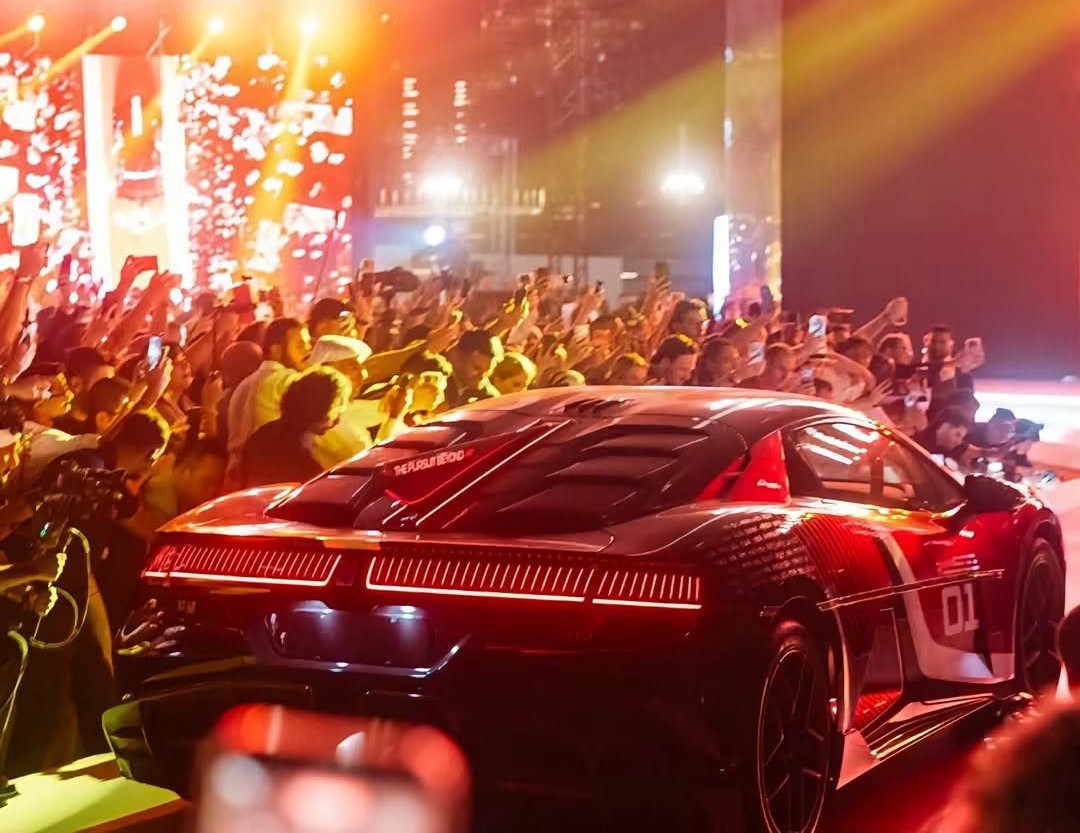
With the 503.17 km/h speed now recognised by the FIA, the achievement represents a significant milestone in the continued development of electric vehicle technology and demonstrates the performance capabilities of modern all-electric production cars.
BYD's Yangwang U9 Xtreme has become the first production car recognised above 500 km/h. Marc Basseng reached 503.17 km/h on a closed stretch of the E11 in Abu Dhabi on 1 November, and BYD announced it on 6 November. That is 6.95 km/h above the car's own 2025 mark, and both Guinness and the FIA recognise the run.
The U9 Xtreme set its 503.17 km/h on the Sheikh Khalifa Bin Zayed International Road (E11) in Abu Dhabi's Al Dhafra region, where authorities closed 10 km with a longest straight of 7 km. That is less than the 15 km of Dubai street Stella Li spoke of in July, the month she promoted the attempt at the Goodwood Festival of Speed, and well short of the 18 km of Nevada highway Koenigsegg used in 2017. At this speed the car covers almost 140 metres a second, so the whole straight lasts about 50 seconds. The E11 carries daily traffic, and crews swept it and checked it metre by metre for wire particles from their own cleaning brushes.
YANGWANG, the luxury sub-brand of global new-energy vehicle (NEV) leader BYD, has set a new global production-car top-speed record of 308.4 mph at the ATP Automotive Testing Papenburg test track in Germany.
The feat was achieved with YANGWANG’s latest U9 Xtreme hypercar on 14 September 2025, eclipsing its previous EV benchmark and the 304.1 mph maximum of the quickest petrol-powered model to become the world’s fastest car overall. This modern milestone in engineering sets a new standard in electric mobility, mixing unrivalled power and speed with zero emissions.
Originally known as the U9 Track/Special Edition, and now officially confirmed as the YANGWANG U9 Xtreme in production guise, or U9X for short, the fastest car on the planet takes the existing technical architecture of the U9 currently on sale in China and harnesses the potential of a number of key evolutions.
These include, but are not limited to: an upgraded powertrain with 1200V ultra-high-voltage electrics (compared with 800V), a lithium iron phosphate Blade Battery with a remarkable discharge rate of 30C, four ultra-high-speed motors that that operate at up to 30,000rpm and produce a total of more than 3000PS, track-level semi-slick tyres, and revised DiSus-X suspension with specific tuning to cope with the increased stresses of circuit driving.
BYD Executive Vice President Stella Li said: “This is an incredibly proud moment for everyone in the research and development division. YANGWANG is a brand that does not recognise the impossible, and only through this commitment to what’s coming next can you end up with a vehicle like the U9X. I extend my gratitude to the whole team, and my thanks to the driver, Marc Basseng, for his skill and technical input. It’s terrific that the fastest production car in the world is now electric.”
The driver for the U9X’s record-breaking run was Marc Basseng, a German track specialist with a long history in sports-car racing and endurance motorsport. He said: “This record was only possible because the U9 Xtreme simply has incredible performance. Technically, something like this is not possible with a combustion engine. Thanks to the electric motor, the car is quiet, there are no load changes, and that allows me to focus even more on the track.”
The U9 Xtreme is now being made available to customers, with a limited series production run of no more than 30 units. Its name is derived from the English word ‘Extreme’, meaning ‘limit’ and ‘ultimate’, with added emphasis on the ‘X’, which represents the unknown. These qualities fit perfectly with YANGWANG’s ethos of taking joy and delight from the act of exploration and the innovations that come 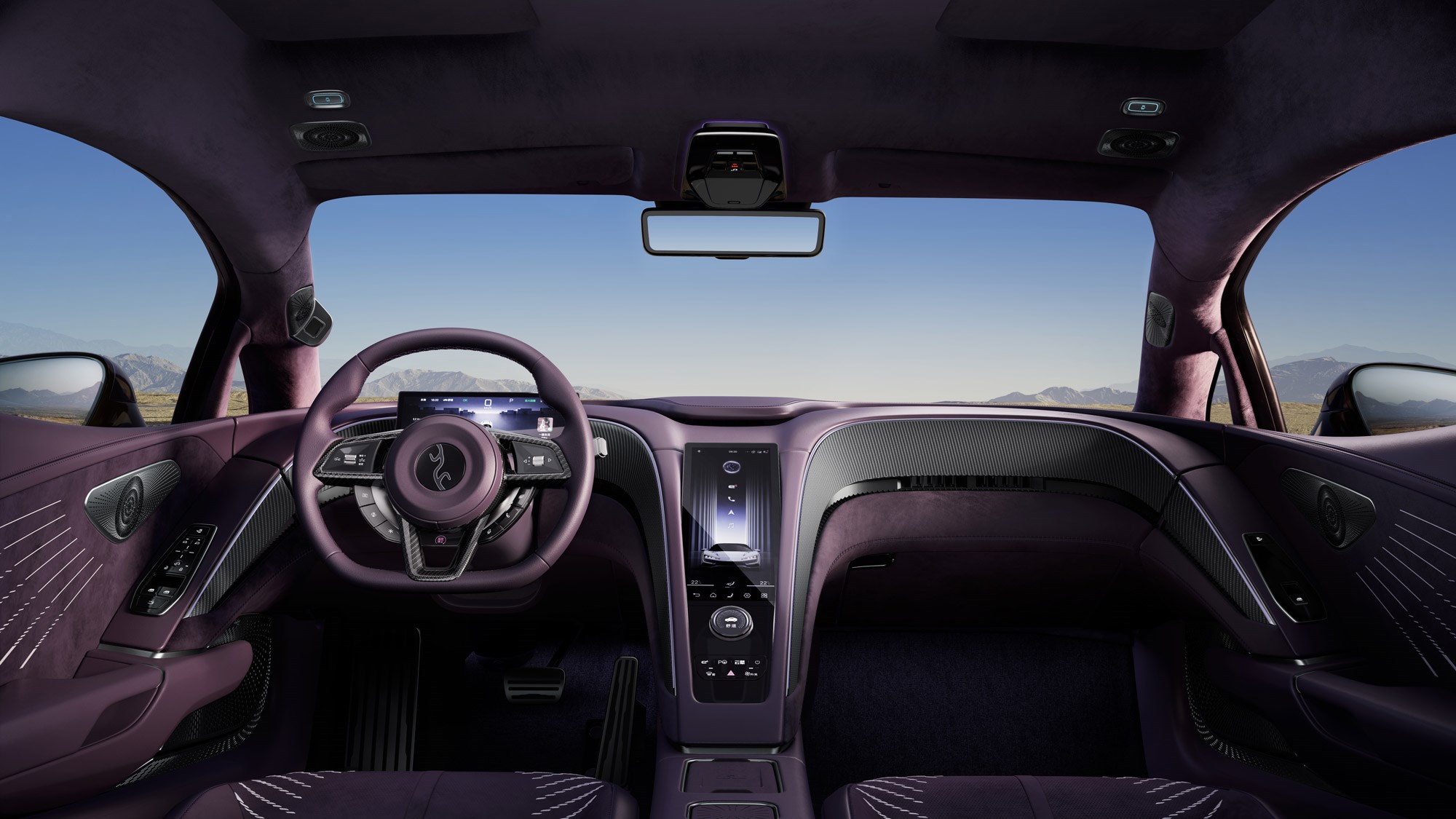
through that process.
By setting a new global speed record, YANGWANG redefines the sustainable hypercar. Backed by BYD's innovation and sustainability commitments, YANGWANG employs cutting-edge tech to deliver unmatched performance, safety, and driving experience.
Two runs on 31 October peaked at 490 km/h, 13.17 km/h short of the final figure. Overnight, BYD's engineers changed how battery and motors were brought to temperature before each run, raised the rear wing angle for more downforce on the rear axle, increased rebound damping to cope with road undulations and adjusted the pressures of the Giti tyres. The second of two passes on 1 November produced the record. Basseng, who also drove the 496.22 km/h run at Papenburg in 2025, said a public road makes precision and stability matter more than ever.
Guinness words both U9 Xtreme car titles as one-way runs, and BYD did not set a two-way average. That record stays with the SSC Tuatara, at a verified 455.3 km/h from January 2021, ahead of Koenigsegg's 447.19 km/h from 2017. A two-way average cancels out wind and gradient, so the 48 km/h gap compares two different measurements. One-way runs have a famous precedent in the Bugatti Chiron Super Sport 300+, whose 490.48 km/h stood from 2019 until the U9 Xtreme passed it in 2025. BYD's new figure sits 12.69 km/h above Bugatti's, and the other two Guinness titles go to the Giti tyres.
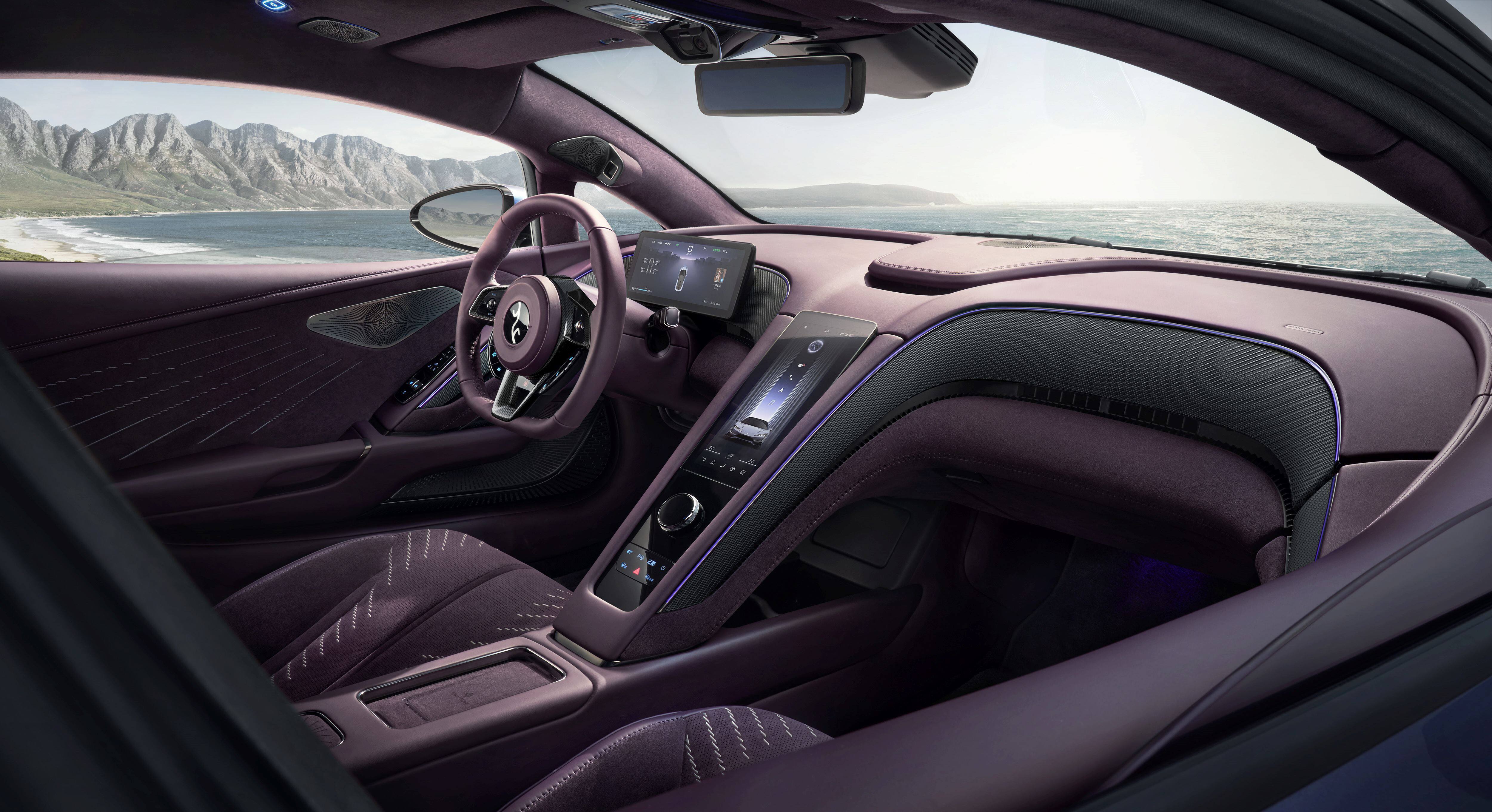
Footage of a U9 Xtreme striking two barriers on a closed test track in China began circulating on 2 November, one day after Basseng's record in Abu Dhabi. BYD has given no date, speed or cause for that crash, so nobody outside the company can say whether it came before or after the record, and the driver climbed out unaided. Abu Dhabi stays busy for Yangwang: the Altior saloon makes its debut there on 8 November, a week after the run.
We said in two earlier Takes that this attempt would slip into 2027, and the car had already done it when the second one appeared. Reaching a verified 500 km/h on a swept public road, with 7 km of straight and one night of setup changes, in a battery car of about 2.5 tonnes is a bigger engineering result than another pass at a German test track, and the one-way footnote does not take that away.
Yangwang plans 30 U9 Xtreme cars and has not said when production starts, even though Guinness lists it as a production car. Each of its four motors spins to 30,000 rpm and makes 755 hp, for 3,019 hp in all; the 2,977 hp in our earlier reports is the same 2,220 kW in imperial horsepower. A 1,200-volt system and an LFP Blade battery still deliver 1,800 kW at 20 percent charge. BYD says the same specification holds the Nordschleife record for production EVs, at 6 minutes 59.157 seconds. It is not clear whether the car will be sold in Europe.
About BYD
BYD is a multinational high-tech company devoted to leveraging technological innovations for a better life. Founded in 1995 as a rechargeable battery maker, BYD now boasts a diverse business scope covering automobiles, rail transit, new energy, and electronics, with over 30 industrial parks in China, the United States, Canada, Japan, Brazil, Hungary, and India. From energy generation and storage to its applications, BYD is dedicated to providing zero-emission energy solutions that reduce global reliance on fossil fuels. Its new energy vehicle footprint now covers 6 continents, over 110 countries and regions, and more than 400 cities. Listed in both Hong Kong and Shenzhen Stock Exchanges, the company jumped into the top 100 companies in the latest Fortune 500 (91st place) and posted revenues of more than 100 billion euros in 2024. BYD continues to invest heavily in future technologies, with more than 10% of its one million employees devoted to reseach and development, producing 45 patents every working day for innovations in pursuit of a greener, more sustainable world.
About BYD Auto
Founded in 2003, BYD Auto is the automotive subsidiary of BYD, a multinational high-tech company devoted to leveraging technological innovations for a better life. Aiming to accelerate the green transition of the global transportation sector, BYD Auto focuses on developing pure electric and plug-in hybrid vehicles. The company has mastered the core technologies of the entire industrial chain of new energy vehicles, such as batteries, electric motors, and electronic controllers. It has witnessed in recent years significant technological advancements, including the Blade Battery, DM-i Super Hybrid Technology, e Platform 3.0, CTB Technology, e⁴ Platform, BYD DiSus Intelligent Body Control System, and DMO super hybrid system. The company is the world's first carmaker to stop the production of fossil-fueled vehicles on the EV shift and has remained top of new energy passenger vehicle sales in China for 10 years in a row.
About YANGWANG
Launched in November 2022, YANGWANG stands as BYD’s flagship premium new-energy vehicle (NEV) brand. It represents BYD's pioneering spirit of exploration, ground-breaking automotive technology, and cutting-edge design, crafting premium NEVs that transcend what customers once deemed achievable.
Posted on 2026/11/27 08:53 AM