

Iphone Duo
The iPhone is getting the biggest change in its nearly 20-year history: a screen that can bend in half.
Apple on Wednesday announced the iPhone Duo, the company’s first foldable smartphone, signaling a major revamp of its most important product. Based on my limited time using the phone, it’s clear that Apple is thinking about how a foldable phone could enable people t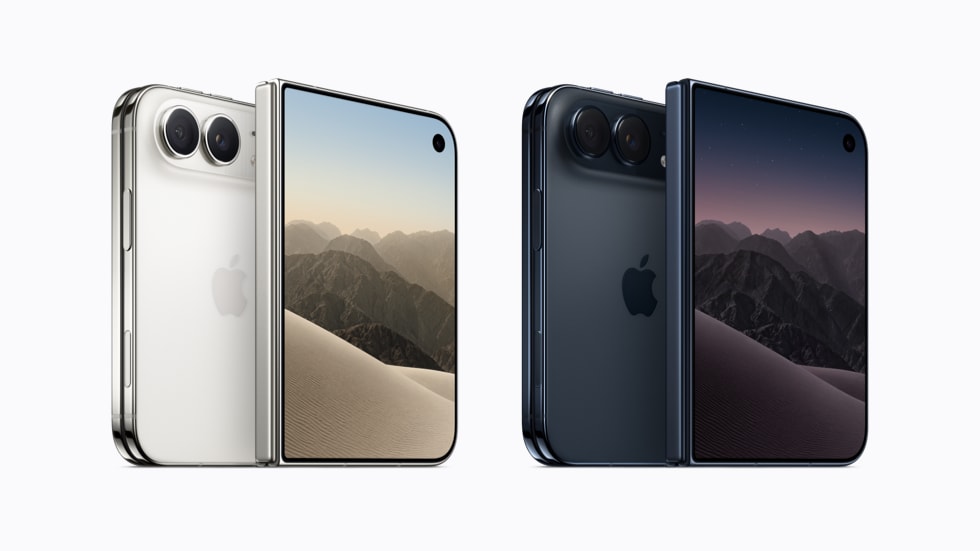 o use their phone differently – like as a bedside clock for example.
The phone has a screen on the outside and opens up to reveal a larger display inside, with cameras on the back, front and inside. It starts at $1,999 and launches on October 23.
Apple is hardly blazing a new path with the Duo. Phone makers like Samsung, Huawei and Motorola have been selling foldable phones for years, though such devices only account for a sliver of global smartphone sales. Apple’s entry into the market is expected to thrust foldable phones into the spotlight, potentially giving them mainstream appeal beyond their early-adopter audience.
Apple CEO John Ternus said at a company event that the iPhone Duo “will redefine the experience of using a foldable phone.”
Whether the iPhone Duo lives up to that claim will depend on if consumers want to spend nearly $2,000 on a phone primarily because it can fold in half.
Many of its most marketed features make the phone seamless to use, based on my limited time using the device. But it’s unclear whether these features will convince people to give up their non-folding phones.
The new device is about the size and shape of a passport, and Apple claims it’s the thinnest iPhone ever when the phone is unfolded. The front screen is 5.4 inches, while the inside display is 7.6 inches.
The inner screen is about the size of an iPad Mini. The screen also has a matte texture that reduces glare and doesn’t seem to easily smudge. Most importantly, the crease is barely visible and you can’t feel it when running your finger across the display.
That’s critical because early foldable phones from Samsung and other companies had very noticeable creases, which made them unappealing to some consumers. However, Samsung and other Android device makers have since changed that, and the latest Galaxy Z Fold 8 has also evolved to become exceptionally thin.
The iPhone Duo’s software is an important part of Apple’s strategy. The company emphasized how the software will adjust its position depending on how the phone is being used. When the phone is partially folded, for example, it will automatically slide app content to either side of the screen.
This was particularly noticeable when watching a video on the inner screen. As I opened the phone, a Netflix show kept playing while it expanded to fit the larger screen without skipping a beat. Similarly, apps parted in the middle to fit either side of the screen when I slightly folded the phone so that it was shaped like an open book.
You can also use both cameras at the same time during FaceTime calls, and the outer display can be used to preview shots. Apps work in split-screen mode, so you can use multiple apps on the bigger screen at once. Samsung and Google have launched similar features for their foldable phones.
Apple has faced pressure to launch a new hit product after recent efforts like the Apple Vision Pro headset and last year’s iPhone Air failed to resonate with consumers.
The iPhone is Apple’s most profitable product, generating more than half its revenue. But the device has mostly remained the same over the past two decades, aside from gaining larger screens, better cameras and more advanced processors.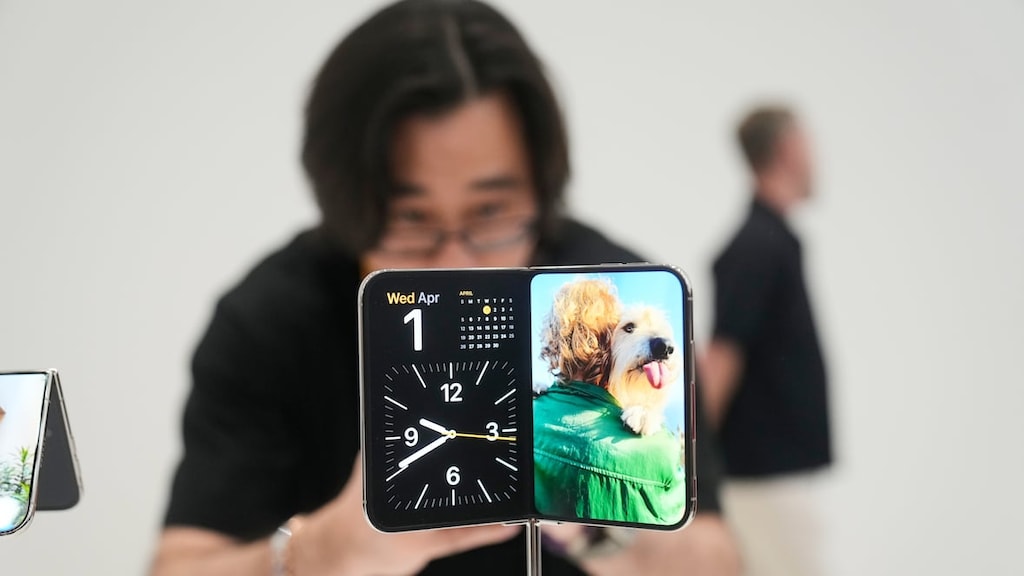
The Duo’s nuances – including the way the software makes adjustments when the display folds in different positions – could be critical for its success. That approach once worked for the iPad and Apple Watch: Apple developed specific software and operating systems to prevent them from feeling like enlarged or shrunken-down versions of the iPhone.
For example, the iPhone Duo has a feature called Standby that essentially turns its cover screen into a bedside clock or a photo frame when the phone is locked and propped up like a tent.
Apple already offers this feature on non-folding iPhones, but those devices must be plugged in and propped up on their side. But this mode is much easier to use on a foldable phone that can stand on its own, potentially allowing users to use the iPhone Duo while it’s resting on their desk.
This convenience factor comes into play as the company faces pressure to develop new AI devices. Ternus, Apple’s new CEO, outlined why he believes the iPhone is the ultimate personal computer for artificial intelligence on Wednesday.
It’s clear that Apple hopes an iPhone that can be used in new ways, especially with AI, could help stave off those pressures.It’s finally here: Apple on Wednesday unveiled its first foldable iPhone, called the iPhone Duo. It’ll start at $1,999 for 256GB in the US. Preorders for the iPhone Duo begin on Oct. 16, ahead of an Oct. 23 release.Apple debuted the new device during its fall event in Cupertino, California, along with the iPhone 18 Pro and Pro Max. It appears the company will save the baseline iPhone 18 for a later reveal, likely in spring 2027.
Similar to Samsung’s Galaxy Z Fold 8, the iPhone Duo is designed to be better suited for consuming all kinds of media. If you’re watching a YouTube video or movie, the inside display gives you plenty of room. Rotate it to portrait, and you can endlessly scroll through vertical videos or read an e-book. The compact cover screen can be handy for quickly sending a message or checking notifications. It’s essentially designed to function as a compact iPhone that can double as an iPad Mini when needed.
I spent some time with the iPhone Duo at Apple Park, and here are a few features that stand out to me.
The iPhone Duo is compact, with a passport-size design. It has a 7.6-inch display on the inside and a 5.4-inch outer display. It fits squarely in my palm, with dimensions similar to Samsung’s Galaxy Z Fold 8, which has a 7.6-inch inner display and a 5.5-inch cover display.
Apple says the Duo is the thinnest iPhone ever when open, measuring 5.2mm. It’s 11.3mm thick when closed. A titanium frame keeps it lightweight at 254 grams.
One of the key differences in feel between Apple’s and Samsung’s phones is that the iPhone Duo has a matte, nano-textured finish on the inner display, which reduces the phone’s crease while also curbing reflections. It has a satisfying feel and really makes the crease virtually disappear when the screen is on. I find it even harder to notice than the Z Fold 8’s, which also has an anti-reflective display.

While the Z Fold 8 has sharper corners, the iPhone Duo takes on more rounded edges. Which look you prefer comes down to preference. For now, I’m partial to the Z Fold 8’s more square-like design that makes it appear slightly more polished , but it’s possible the Duo’s style will gro w on me.
There’s another distinguishing trait on the iPhone Duo. When opening the phone, the content transitions from the cover screen to the main display almost immediately. On the other hand, when I prop the Z Fold 8 open, content shifts from the cover to the main display when it’s about halfway open. It’s a neat element that can help the Duo feel more refined; I’m just not sure if it’ll make a significant difference in the user experience. I’ll need more time with the phone to decide.
The Duo supports multitasking with up to two apps. The Z Fold 8, in comparison, supports up to three apps (though things get a little crowded, so I tend to stick to two).
Interestingly, the Duo’s volume buttons are at the top of the phone when holding it in landscape. That prevents them from being cluttered amid the lock and Camera Control buttons, but it might take some time to get used to the placement. On the other hand, it’ll be easier to adjust the volume when the phone is rotated to portrait.
The Duo’s cover is made with Apple’s Ceramic Shield 2, while Ceramic Shield protects the back. Perhaps one of the Duo’s most impressive traits is the IP68 rating for dust and water resistance, putting it on par with the durable Google Pixel 11 Pro Fold. Apple says a titanium plate helps to improve the Duo’s durability.
The iPhone Duo’s hinge is made of more than 100 components, according to Apple, making for a smooth open and close. The unfolding mechanism did give off a silky, premium feel as I repeatedly unfurled and shut the display.
Apple’s foldable comes in two colors, dubbed star white and night sky, which is a navy hue. It’ll be compatible with the Apple Pencil, which separates it from the Z Fold 8, which sadly doesn’t support Samsung’s S Pen.
To unlock, the Duo supports Touch ID, rather than Face ID. That’s a bit of a letdown, especially at such a high price. But I tend to use fingerprint unlock on the Z Fold 8 anyway, so perhaps it won’t be much of an adjustment for everyone.
Like the iPhone 18 Pro models, the Duo is powered by the A20 Pro chip.
The iPhone Duo has a 48-megapixel main camera and a 48-megapixel ultrawide camera. Like the Z Fold 8, there’s no telephoto camera. I didn’t mind the lack of a telephoto lens on Samsung’s foldable, so I’m curious if I’ll feel the same once I take Apple’s new foldable out into the world to snap some photos.
The iPhone Duo supports 4K video at 120 frames per second in Dolby Vision, as well as 4K time-lapse video in Dolby Vision HDR.
Dual Capture in FaceTime lets you use the front and rear cameras simultaneously. When taking photos, you can turn on Duo Preview on the cover screen when the phone is unfolded, so your subject can see how the shot will look as you snap with the rear cameras. A feature called Kid Cue displays Peanuts animations on the cover screen to help draw kids’ eyes to the camera. This is similar to Made You Look on Pixel’s foldables.
Apple says the iPhone Duo will give you up to 31 hours of video playback on the inner display, and 44 hours when using the outer screen. When using both equally, the company says you’ll be able to go 24 hours before needing to charge.
Considering how often I use both the cover and inside displays on the Galaxy Z Fold 8, I have a feeling my battery life would lean more toward that 24-hour mark. But we’ll have to see how the phone holds up in CNET’s battery tests.
With the iPhone Duo, Apple enters an increasingly competitive foldable phone market, with key players including Samsung, Google and Motorola, as well as Chinese brands like Honor, Oppo and Huawei. Now, it’s Apple’s turn to further shape the space – and likely nudge it forward.
Analysts predict the iPhone Duo could give foldables, which remain a niche smartphone category, a significant boost. IDC forecasts that global foldable shipments will grow by more than 12% this year, with Apple’s entry driving much of that growth. The research firm also expects Apple to ship more than 17 million foldable iPhones by 2027, giving the company nearly 40% global market share by the end of next year.
“The iPhone Duo is the event’s strategic flagship and a direct test of whether Apple can use design, ecosystem integration and premium positioning to reshape a segment that has so far remained selective,” said Francisco Jeronimo, vice president of devices at IDC.
Posted on 2026/09/10 08:48 AM