

FIFA World Cup 2026
The 2026 FIFA World Cup kicked off on June 11. It is the biggest tournament yet, featuring a historic 48-team format and 104 matches spanning three host nations: the United States, Mexico, and Canada
Tournament Details
- Dates: June 11 – July 19, 2026
- Host Cities: 16 cities across North America (including [Atlanta, Dallas, Los Angeles, and Mexico City])
- Format: 48 teams split into 12 groups of four, with a new Round of 32 knockout stage
It's difficult to miss the buzz and excitement surrounding the Fifa World Cup.Football (or soccer, as they call it in North America) is the world's most popular sport and the World Cup is the most prestigious prize of them all.For the first time in the tournament's nearly 100-year history, it will be jointly hosted by three countries - Mexico, Canada and the United States.The opening match will be played in Mexico City on 11 June. And the final is in the US state of New Jersey on 19 July.
For anyone new to the beautiful game, here's what you need to know:The World Cup is staged every four years. The 2026 tournament is the largest ever, with 48 countries competing. Using world rankings, the teams have been drawn into 12 groups of four countries.The top two teams  in each group automatically go through to the next phase - which is known as the round of 32.Winning a match earns a team three points. Draws (or tying the match) gives both teams one point. A loss means, you guessed it, zero points.
The rest of the round of 32 teams are made up of the teams who came in third during the group stage and had the best overall results. Sixteen teams are eliminated in this phase.
Matches are 90 minutes long, broken into two 45-minute halves. Players have a 15-minute break at half-time.The game clock is constantly ticking, there's no pause for stoppages. A few extra minutes are added at the end of the halves to make up for any time spent treating players for injuries, delays and mandatory water breaks, which have been introduced by Fifa to help with the summer heat.There are no penalty shootouts in the group stage to determine the winner of a match.
After the group stage, if a match is tied, an extra 30 minutes is played. If there is still no winner, there will be penalty kicks.
What are the host cities in each country?
- Mexico: Guadalajara, Monterrey and Mexico City
- Canada: Toronto and Vancouver
- US: Atlanta, Boston, Dallas, Houston, Kansas City, Los Angeles, Miami, New York/New Jersey, Philadelphia, San Francisco Bay Area and Seattle
Who are the favourites?
Two-time winners France and 2010 champions Spain are two teams hotly tipped. France have a stellar squad of players, including Kylian Mbappé and Ousmane Dembélé, who have powered their individual clubs in Europe's top competitions.Spain will be banking on youthful talent such as 18-year-old Lamine Yamal to lead them to a second major trophy in two years.England, after back-to-back heartbreak in the finals of two European Championships, are also in with a chance.And there is of course the traditional favourites Brazil, the most successful country in the tournament.
Brazil are seeking their sixth world title, which would be their first since 2002.

 Who are some players to watch?
Mbappé and Yamal are expected to be some of the most exciting players to watch this summer. Mbappé is appearing at his third World Cup for France and has powered Les Bleus to two successive finals.
He has won one (2018) and lost one (2022).Yamal, for Spain, represents a new generation of talent and could became one of the sport's biggest stars of the future.Eyes will inevitably also be on Argentina's Lionel Messi and Portugal's Cristiano Ronaldo, whose rivalry has dominated the sport over the last two decades.Messi will turn 39 later in June and Ronaldo is 41 years old, and this is likely to be their last major tournament before retiring.Others to look out for are Brazilian playmakers Neymar and Vinícius Júnior, England's Jude Bellingham, USA's Christian Pulisic, Canada's Alphonso Davies, South Korea's Son Heung-min, Ghana's Antoine Semenyo and his Manchester City teammate Erling Haaland of Norway, who has scored the most goals in three out of the last four English Premier League seasons.
Who is debuting in the World Cup?
The expanded format of this World Cup has allowed for more countries to participate. It has also ensured that we will see some nations that have never been on football's biggest stage before.Curaçao, with its population of just 156,000, will make a historic debut as the smallest nation to ever qualify for the World Cup, beating the record set in 2018 by Iceland.Another small island making a premiere showing is Cape Verde. With a population of about 500,000 people, they are the third smallest country ever to make it the World Cup.Jordan has had recent footballing success that have culminated in their maiden World Cup qualification. Their head coach, Jamal Sellami, who is originally from Morocco, was granted Jordanian citizenship by King Abdullah II as appreciation for leading the team to global heights.
Uzbekistan are the last of the debutantes, but they will have valuable experience in the team by way of head coach Fabio Cannavaro, who went to four World Cups as a player and led Italy as its captain to victory in the 2006 tournament.
Which matches have interesting story lines?
Football isn't just a sport; politics and history frame some of the most important games.When France and Senegal meet on 16 June it will be with the backdrop of colonial history that has defined the relationship between the two nations.
Senegal previously caused an upset at the 2002 World Cup when they beat France, then reigning champions.Ghana and England, who also have former colonial ties, will play in Philadelphia on 23 June.Iran and Egypt will play in Seattle in a game that was locally dubbed the "Pride" match to celebrate the city's LGBT community, which led both nations' football federations to formally object to Fifa.

 How the two nations navigate the event will be closely watched as same-sex relations are criminalised in both countries.
Iran also comes to the tournament amid war with the US co-host.All of Iran's matches in the group stage are in the US, but the team has chosen Mexico as its base camp and will commute to the US for their matches.Haiti are returning to the World Cup for the first time since 1974 and they are set to play against Scotland, who are also making a comeback after 28 years.
It’s World Cup season, folks, which means a summer spent watching the very best players on the planet.
For those who follow the sport of soccer (yes, we are calling it that despite it being known as football around the world), you know exactly what to expect. Undiluted drama, pure cinema and narratives that even the best scriptwriters in Hollywood would struggle to muster up.
But this isn’t just a World Cup for your initiated soccer fan, this is a chance for everyone to fall in love with the world’s game. To do that, you need to understand the basics. Trust me, I know. I spent my first year at CNN trying to understand what March Madness was… I’m still not totally sure I understand it either, despite my colleague Dana O’Neil’s attempts to explain it.First, there are no stupid questions in this classroom, so we can start with the basics.The sport is easy in that respect. It’s 11 players on either team at any one time. Managers can then make a total of five substitutions each during the match – to freshen things up or switch tactics and so on.The teams play for 90 minutes per game, split into two 45-minute halves. A win gets you three points, a draw gets you one and a loss gets you absolutely nothing at all.
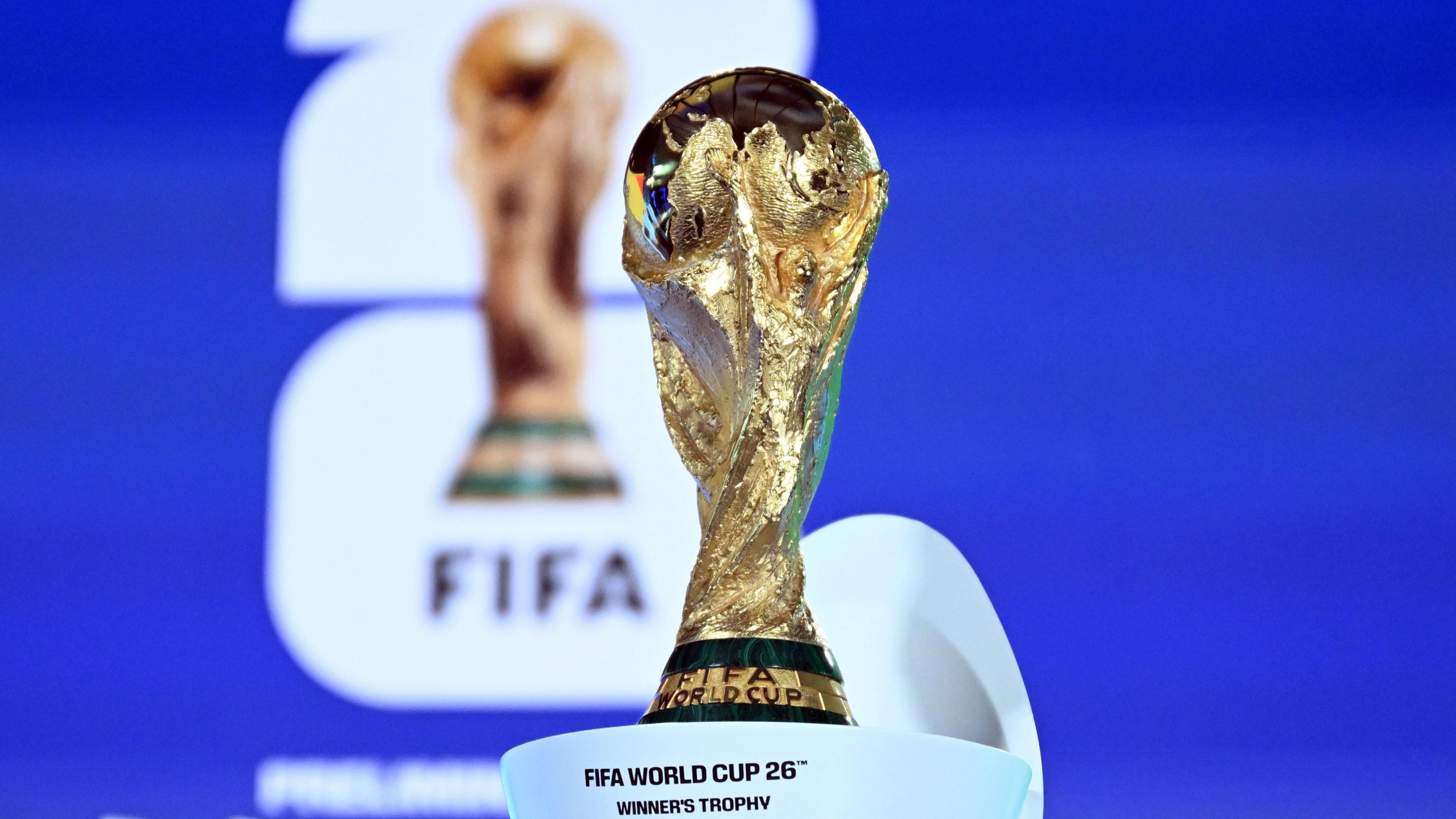
This year will see the biggest World Cup on record, with a total of 48 teams vying for the one trophy. Those teams have been split into 12 groups of four teams, decided by the World Cup draw in December.
The teams in each group play each other once, meaning all nations will play a minimum of three games at the tournament. Each group is a mini-league, with final rankings based on the number of points each team gets from its three matches.Once all the group matches are over, the top two nations from each group progress to the knockout rounds. Then, eight of the best third-placed finishers across all the groups join them. It essentially means we will have a total of 32 teams in the first knockout stage – if your team wins a group game, they’ve got a great chance of progressing into the next round.This bit is now pretty simple because the knockout stages work just like any other bracket in any other sport. The winner goes through to the next round. So, it would go: Round of 32, round of 16, quarterfinals, semifinals and the final (though there is also a third-place match for the losers of each semifinal).
 This is the first time we’ve had a Round of 32 at the World Cup, due to the increased number of teams. Only 16 nations will exit the group stage.The rules of a knockout game are the same but, naturally, there can’t be any draws. So, if a match is tied after 90 minutes, then there will be 30 minutes of extra time – split into two 15-minute periods with a very short interval in between.If there is still a tie after that, then we go to the dreaded penalty shootout. Each team will take five penalties each, with the team scoring the most winning the match. If no one misses in those first 10 attempts – or if each team scores the same amount – then we head to a knockout scenario until someone eventually does come out on top.
You’ve got to be a certain type of someone to enjoy the tension and drama of a penalty shootout. Personally, I love them…
Who might win?
It’s very unlikely for there to be an upset at the World Cup. There’s just too many quality teams for an underdog to go all the way – sorry to any USMNT fans out there.
The champion is likely to be one of the top teams – think France, Spain, Argentina, Brazil, England or Portugal. But, that being said, there will be plenty of surprises along the way.You can always expect one of those top teams to be beaten earlier than expected and there is guaranteed to be a smaller team that has a deep run in the knockouts. That’s the beauty of a cup competition.Now, we’ve covered what to expect from the World Cup, you might be left wondering why so many people love this game and where it all started. In truth, the answer to both those questions is up for debate.Ahead of this year’s World Cup, I spoke to soccer historian Matthew Taylor to try to get to the bottom of why kicking a ball around eventually became a sport that took over the world.“There are forms of ball games that exist in lots of ancient societies,” he said. “I suppose the most well-known one recently is Cuju, the Chinese game.
“But there were forms of ball games everywhere, and people have tried to connect them. But I think it’s difficult to do so. A game involving a ball and potentially the use of feet and hands is quite endemic to the way humans are, so I think it’s difficult to make very clear connections with the codified game.”
And that’s the crucial bit, the codification of the game we see today occurred in the late 19th century.
The simplistic answer is to say the birthplace of modern soccer is the Freemasons’ Tavern, an old pub situated in the West End of London. This was the place chosen by the newly formed English Football Association in 1862 to hash out the rules by which the game should be played.
There’s still a plaque outside the building today – now a hotel and nightclub – which reads “The Football Association was formed on the proposal of Ebenezer Cobb Morley at the Freemasons’ Tavern which stood on this site. The modern game of football was born on this day. 26 October 1863.”As neat and whimsical as that is, it’s debated. Others claim to have invented the modern game, notably in Scotland. Experts simply can’t really decide… sorry.“I think the truth is that it emerges from a kind of mixture of people and places,” Taylor said. “So, yeah, it’s a chaotic and complicated picture.”
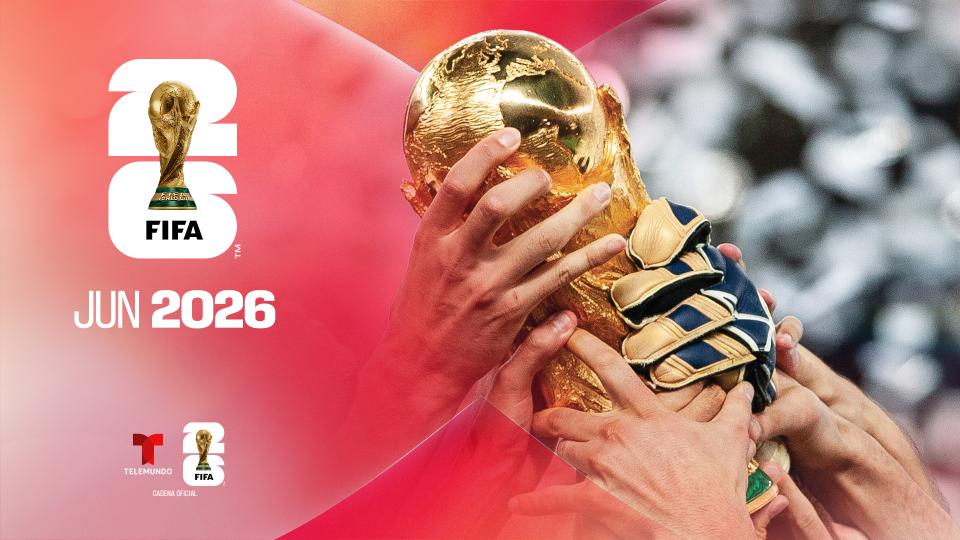
Now, though, the global game is governed by FIFA. It is they who are organizing the World Cup this summer and who are trying to grow the sport in every which direction.The money involved is astronomical, with the sport a commercial beast that has more political sway than most nations. But strip it all away, and the Beautiful Game itself hasn’t changed anywhere near as much. After all, it’s still 22 people running around trying to score.And it’s that simple essence of the game that initially made it spread throughout the world, somewhat off the back of the British Empire and trade routes that helped disseminate the word of soccer.
While the British were important in the spread of the game, Taylor says its far more complex than that.“One way of understanding the way in which the sport spread is a kind of openness and cosmopolitanism,” Taylor said, explaining that those who helped spread the game did so to be associated with a new frontier.“These are fairly cosmopolitan, mobile people for whom football represents a sense of Britishness, but a kind of Britishness which is also very modern. To start a football club is kind of to associate yourself with this, this kind of very modern world and football represented that.“That’s one of the reasons, apart from the fact that it’s an easy game to develop and a very fun game to play, that football spread so widely.”
So there you have it, a crash course in soccer and the World Cup. Now that you have the basics, it’s time to get watching.
The first game between co-host Mexico and South Africa kicks off on June 11 and the final isn’t until July 19. You’ve got 104 chances to watch a game in between those bookmarks and you now have no excuse not to.
Posted on 2026/06/11 09:01 AM