

Why USA President Trump Extended his Ceasefire with Iran?
USA President Donald Trump huddled with his national security team Tuesday afternoon at the White House facing a major decision: what to do next with Iran.
His ceasefire deadline was nearing its end, and Air Force Two was sitting on the tarmac at Joint Base Andrews ahead of Vice President JD Vance’s scheduled departure to Pakistan for the next round of talks. But the administration was dealing with a conundrum: virtual silence from the Iranians.
In the days prior, the US had sent Iran a list of broad deal points that they wanted the Iranians to agree to in advance of the next round of talks. But days had gone by without the US getting a response, raising suspicions about how much Vance and others could achieve by heading to Pakistan for pla nned in-person talks, according to three officials familiar with the matter.
As Trump met with Vance, Secretary of State Marco Rubio, Defense Secretary Pete Hegseth, Chairman of the Joint Chiefs Dan Caine and CIA Director John Ratcliffe at the White House Tuesday, the administration had still heard nothing from the Iranians. Officials had urged the top mediator from Pakistan, Field Marshal Asim Munir, to get at least some kind of response before Vance boarded Air Force Two.
Still, hours later, there was nothing.
At the White House, Trump’s top aides believe a main reason they didn’t hear back was fractures within the current Iranian USA leadership, their understanding based partly on dispatches from the Pakistani intermediaries, according to the three officials. The administration’s sense is that the Iranians don’t have consensus on their position or how much to empower the negotiators on uranium enrichment and the country’s current stockpile of enriched uranium — a major sticking point in the peace talks.
When Tehran pushed back, his threats to send “lots of bombs” unless it agreed to US terms made him look even more fixated on a deal.
Often, as in the case of the strait, Trump’s statements undermine his credibility because they are demonstrably not true. The constant stream of contradictory information also bolsters impressions that he’s got no strategy and is winging it — a constant critique from foreign policy experts during the war.
And he’s hardly offering a poker face to Iran’s negotiators — or the real powers behind them back in Tehran, who, unlike Trump, are in the shadows and silent.
Trump’s social media antics may be only making things worse.
Some of Trump’s officials privately acknowledged to CNN’s Alayna Treene and Kevin Liptak that his public commentary has been detrimental to talks, noting that prior sense of deep distrust. The president’s false claims last week that the Iran had agreed to almost all US demands — including on handing over enriched uranium — were not appreciated by negotiators who are on thin ice at home.
While it’s hard to remember what normal used to feel like, presidents don’t usually conduct themselves in such a manner before critical talks. Ronald Reagan never warmed up for summits with Soviet leader Mikhail Gorbachev by blitzing 1980s TV networks hailing agreements before they even met.
Part of that complicating factor, the US believes, is whether the new Supreme Leader Mojtaba Khamenei is giving his subordinates clear directions — or if they’re simply having to guess what he wants without specific instruction.
US officials believe his efforts to remain hidden have disrupted internal Iranian government discussions.
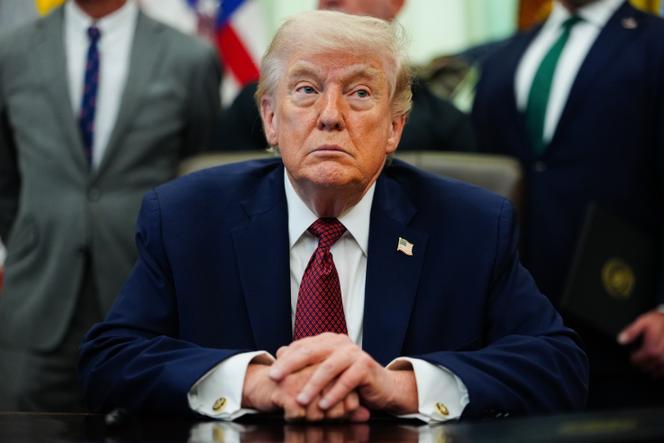
Despite those significant hurdles, one official said there is still a chance U.S. and Iranian negotiators meet soon. But if and when that happens is far from certain.
Rather than resume military strikes, President Donald Trump opted to extend a two-week ceasefire with Iran soon before it was set to expire. This time, he did not specify an end date. Trump, who called Iranian government officials “seriously fractured” in an afternoon Truth Social post extending the ceasefire, remains eager for a diplomatic solution to the war, wary of reviving an unpopular conflict he’s claimed the US already won.
Yet the negotiations’ collapse, for now, underscores the difficulties Trump continues to face as he seeks a deal that meets his numerous demands.
Iran has publicly insisted that Trump lift his blockade on ships entering or exiting Iranian ports in the Strait of Hormuz before Tehran will engage in a new round of talks. Trump has resisted the demand. “We’re not going to open the strait until we have a final deal,” he said on CNBC on Tuesday mornin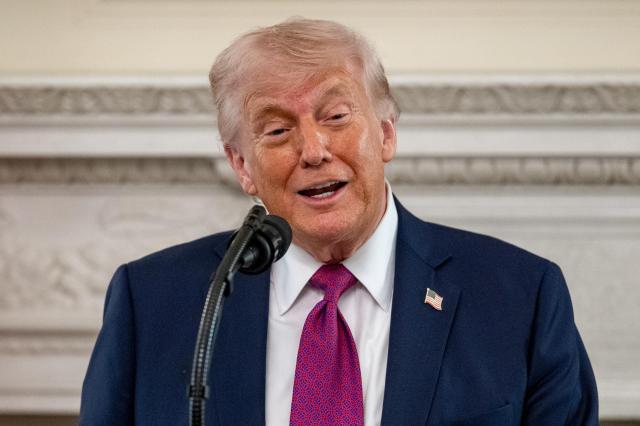 g.
g.
In an afternoon meeting, Trump and the rest of the group determined to extend the ceasefire that Pakistani mediators said would expire in just hours, though Trump had suggested he believed would run until Wednesday evening in Washington. Doing so, in theory, could allow Iran more time to coalesce around a single position with sign-off from Khamenei, though officials said there was little guarantee.
Officials said a trip could be arranged quickly if they receive indications that Iran is prepared to come back to the table. Both the US and Tehran stand to suffer economically as long as the strait remains effectively closed, leading some officials in the region to hope that both parties are motivated to reach a solution sooner rather than later.
Pakistani officials, who scrambled Tuesday to convince Iran to join the talks, were simultaneously encouraging Trump to extend the ceasefire. As its expiration neared, Trump made the call to “extend the Ceasefire until such time as their proposal is submitted, and discussions are concluded, one way or the other.”
Iranian officials sounded unmoved.“The worst thing you can possibly do in a deal is seem desperate to make it,” Trump wrote in the 1987 book that lionized wheeler-dealing and himself.The commander in chief risks walking into that very trap ahead of possible talks in Pakistan between top US and Iranian negotiators in the coming days.He can’t stop talking about the possibility of a deal. But since he’s not at the table with Iran’s leaders, he might be worsening the prospects.Late last week, he announced on Truth Social that it was already done, claiming Iran had agreed to every US demand on handing over nuclear stocks, opening the Strait of Hormuz and halting support for terror groups.
“Trump’s ceasefire extension means nothing,” said Mahdi Mohammadi, an adviser to Iranian Parliament Speaker Ghalibaf, who has led the Iranian negotiating delegation. “The losing side cannot dictate terms. The continuation of the siege is no different from bombardment and must be met with a military response.”
Trump’s announcement that the truce would remain in place capped a day clouded by uncertainty, which began with a proclamation from Trump that he “expected to be bombing” Iran again in the near-term.
Still, without a new deadline, Trump’s advisers have privately warned the president that alleviating pressure could allow Iran to drag out negotiations, according to sources familiar with the discussions.
At the least, negotiators had hoped to produce a framework understanding this week between the US and Iran. US officials had hoped that would then lead to more detailed talks over the coming weeks on the finer points of a deal.
That approach, however, had its detractors, who warned that Iran could be drawing out the discussions as a play for time as it unearths some of its missile systems that have been buried over the course of the war.
A number of critical points — including Iran’s future ability to enrich uranium, what becomes of its stockpile of highly enriched uranium and what sanctions on the country are lifted — remain unresolved, according to people familiar with the talks.
How flexible each side is on their terms will ultimately dictate whether a deal can be reached. For Trump, one imperative is not agreeing to a deal that could be likened to the Obama-era Joint Comprehensive Plan of Action, an Iran nuclear deal Trump withdrew from in 2018 and has continuously derided as weak.
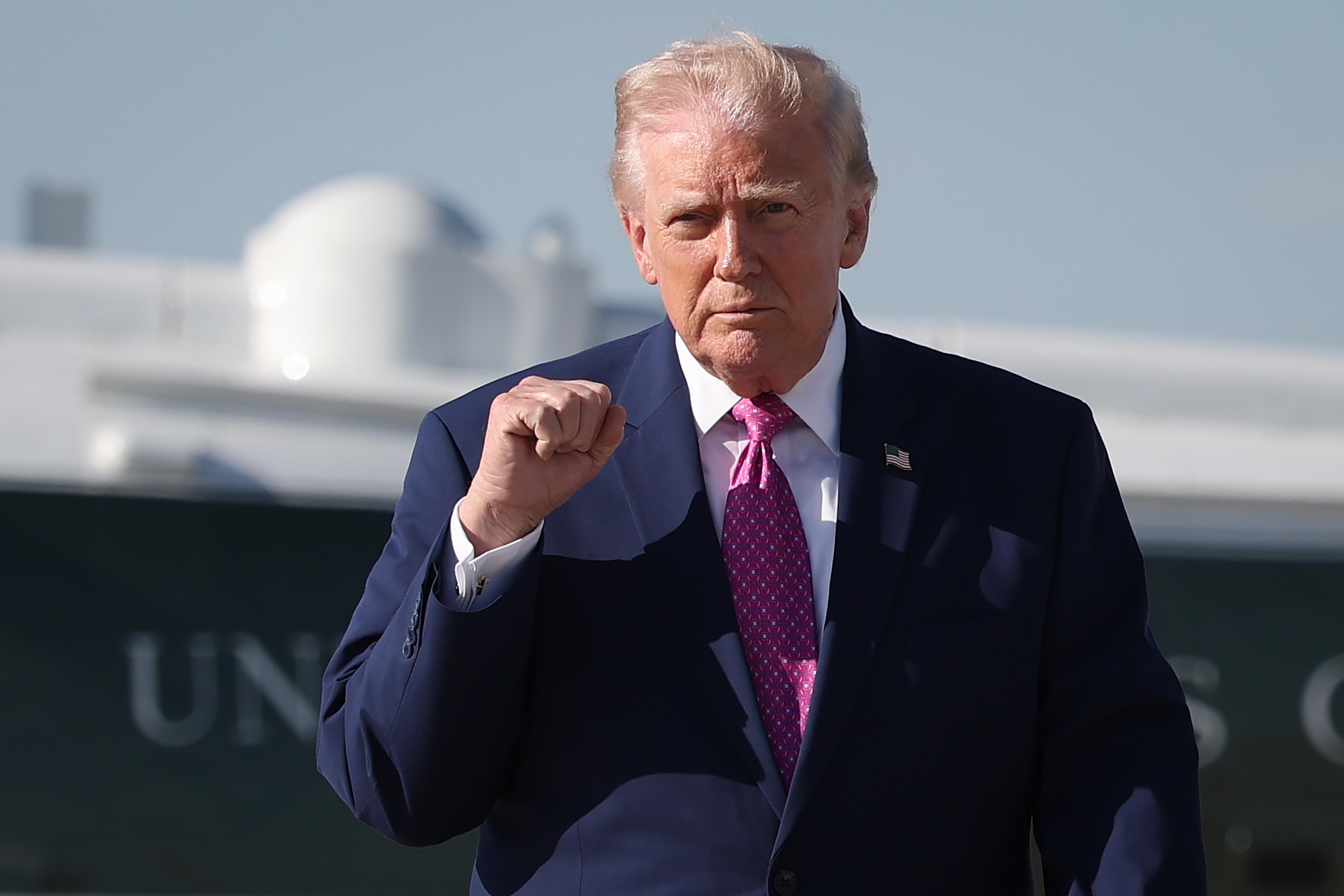
Over the last several days, Trump has sounded bullish on securing a superior agreement based on his negotiating skills, even claiming on Tuesday that he would have “won Vietnam very quickly” if he’d been president at the time.“What I think is that we’re going to end up with a great deal,” he insisted. “I think they have no choice. We’ve taken out their navy, we’ve taken out their air force, we’ve taken out their leaders, frankly, which does complicate things in one way.”Hours later, as he was honoring college athletes from the State Dining Room, Trump was uncharacteristically silent on the war during his remarks, waving to reporters who tried to ask questions about the war before he exited the room.
It follows, then, that the president sees the small device always in every citizen’s hands as a source of incredible power. He doesn’t need to call a news conference to talk to the world. He can just post. This must be the first war conducted by social media: Trump has announced results of air strikes, warned Iranian civilization might “die” and proclaimed peace online.Social media and Trump were made for each other. He used it to grab a hold on America’s national psyche that has lasted more than a decade. And he shows no restraint in using it, day or night. You can delete social media apps. But every Truth Social post will be instantly transmitted by global media anyway.In “The Art of the Deal,” a man who unapologetically seeks always to be at the center of the action admits that what drives him is more the quest for a deal than what is actually in it.And diplomacy for Trump is hardly a whispered backstage process. His summits with North Korean leader Kim Jong-Un didn’t produce much, but they put Trump in the global spotlight. His lavish welcome to Russian President Vladimir Putin last year — a pageant of parked fighter jets and red carpets — was a bust on ending the war in Ukraine. But it made for a great photo-op.
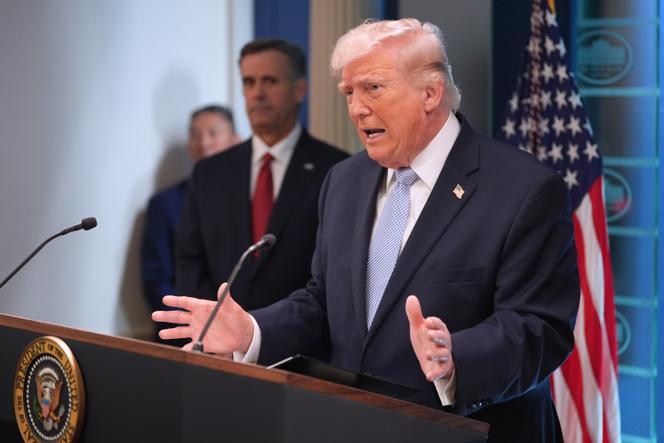
The sense that Trump might be getting in the way of his own aspirations was also raised by a Wall Street Journal article over the weekend. The paper said he was kept out of a room where aides were getting updates on the daring rescue of a US airman in Iran because “they believed his impatience wouldn’t be helpful.”Peace negotiations, especially those involving the complex issues of enrichment, centrifuges and monitoring, are deeply sensitive. They often require back-channeling and months or even years of discussions. Each side needs to feel they have claimed vindication to get over the line.Bullying rarely works. Blaring about the process on social media makes it even harder. Trump on Monday said that he was unlikely to extend a ceasefire with Iran due to expire this week. This might have been an attempt to turn the screws, but it also risked giving the Iranian side an excuse not to show. Still, given Trump’s wildly gyrating social media record, he might post the complete opposite next.
Iranian negotiator and Parliament Speaker Mohammad Bagher Ghalibaf is still faulting Trump’s methods. In a post on X, he accused the president of seeking “to turn this negotiating table— in his own imagination— into a table of surrender or to justify renewed warmongering.”But if the “art of the deal” works and somehow, Trump ends Iran’s threat to the rest of the world, he’ll have a win that no other modern president managed. One thing’s for sure: He’ll be the first to tell the world.This week’s proposed talks in Islamabad lack one key ingredient of the Trump peace playbook: He will not be there. This may be for reasons of protocol, since Iran’s negotiators will be well below head-of-state level, or it may be down to security. Trump, however, told reporters last week he “might go” if a deal is signed.
Posted on 2026/04/22 08:54 AM