
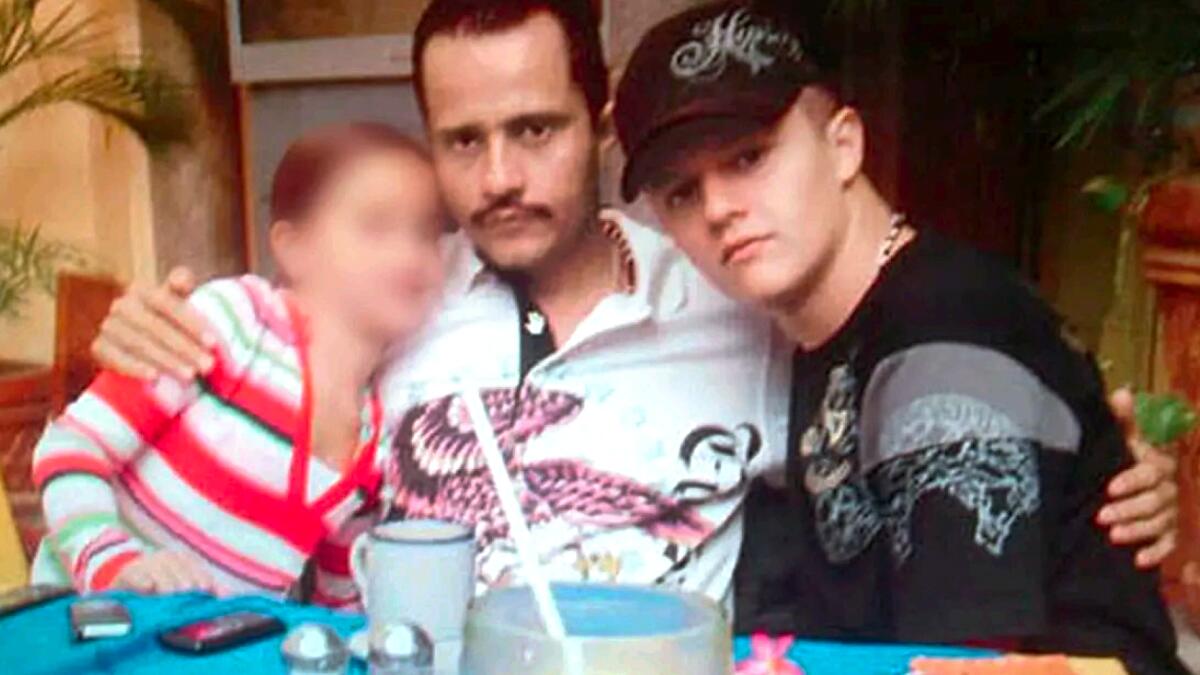
El Mencho Mexican Drug Dealer
Security forces tracked El Mencho, one of the United States’s most wanted fugitives, to a property in the mountain town of Tapalpa, central-western Mexico, after receiving intelligence linked to a close associate.Troops launched a predawn raid on Sunday, triggering hours of gun battles and a wave of violence across several states.The killing marks the most significant blow against organised crime since Mexican and US authorities recaptured Joaquin Guzman, known as “El Chapo”, nearly a decade ago.Here is what we know about how the operation to capture El Mencho unfolded on Sunday.
Who was El Mencho?
El Mencho, 59, was believed to be a former police officer. He was from Michoacan, western Mexico, and built a vast criminal enterprise over more than 30 years.US authorities convicted him of heroin trafficking in the mid-1990s, and he served a prison sentence in the US before returning to Mexico, where he rose rapidly within the drug underworld.Around 2009, he founded the JNGC, which expanded rapidly to become one of Mexico’s most powerful and violent cartels.The group trafficked cocaine, methamphetamine and fentanyl to the United States and smuggled migrants northwards.
How did the operation unfold?
On February 20, acting on new intelligence from an associate of one of El Mencho’s romantic partners, Mexican authorities began surrounding the site in Tapalpa where El Mencho was believed to be hiding.Special forces, backed by the National Guard, military aircraft and helicopters, sealed off the area before dawn on February 22.Cartel gunmen opened fire as soldiers advanced. Security forces returned fire, killing several suspected CJNG members. El Mencho and members of his inner circle fled to a nearby wooded cabin complex, where a second firefight erupted.Soldiers eventually found a wounded El Mencho alongside two bodyguards. The authorities airlifted him to a medical facility, but he died during the flight.
A US defence official told Reuters that a US military-led intelligence task force focusing on drug cartels had supported the operation.
What happened in the aftermath of the operation?
The raid set off an immediate response from cartel bosses. The defence ministry identified a senior JNGC figure known as “El Tuli”, El Mencho’s right-hand man and a top financial operator within the cartel, as the organiser of coordinated attacks in Jalisco.
Mexican authorities said he orchestrated roadblocks, arson attacks and assaults on government facilities, and offered a bounty of 20,000 pesos ($1,100) for the killing of each member of the military, following the February 22 operation.
Later the same day, security forces tracked him to El Grullo, a small town about 180km (112 miles) southwest of Guadalajara. He attempted to flee, firing on officers who killed him in the ensuing clash.
Violence spread across Mexico rapidly. Cartel members torched vehicles and blocked highways in several states.Airlines cancelled flights to Puerto Vallarta, a Pacific resort city in the western state of Jalisco, as plumes of smoke rising over parts of southern Mexico grabbed international headlines.Schools and universities suspended classes, and local authorities urged residents to remain indoors.By Monday, authorities reported that at least 30 suspected gang members, 25 National Guard troops and one civilian had been killed in the unrest following the operation.Security forces arrested more than 70 people across seven states and recorded at least 85 cartel-related roadblocks on Sunday alone.The killing of El Mencho removes one of Mexico’s most feared crime bosses.While Mexico has long pursued a strategy of targeting cartel leaders, the experience has shown that removing kingpins can fracture groups and spark internal power struggles, analysts say.
Oseguera Cervantes, also known as “El Mencho.” Oseguera Cervantes is one of the founders and the current leader of the Cartel de Jalicso Nueva Generación (CJNG). Oseguera Cervantes is one of the most wanted fugitives in Mexico.
CJNG was formed in 2009 and has grown into one of the most violent drug cartels in Mexico. It has been assessed to have the highest cocaine, heroin, and methamphetamine trafficking capacity in Mexico, and over the past few years, includes the trafficking of fentanyl into the United States. Under Oseguera Cervantes’ leadership, CJNG has been responsible for many homicides against rival trafficking groups and Mexican law enforcement officers. More recently, CJNG operatives, allegedly under Oseguera Cervantes’ direction, were involved in assassination attempts of Mexican government officials.

 Since 2017, Oseguera Cervantes has been indicted several times in the U.S. District Court for the District of Columbia. The most recent superseding indictment, filed on April 5, 2022, charges Oseguera Cervantes with conspiracy and distribution of a controlled substance (methamphetamine, cocaine, and fentanyl) for purposes of unlawful importation into the United States and use of a firearm during and in relation to drug trafficking crimes. Oseguera Cervantes is also charged under the Drug Kingpin Statute for operating a continuing criminal enterprise.
There are only a handful of names that have had a lasting impact in the history of Mexican organised crime.Nemesio Oseguera Cervantes – more commonly known as "El Mencho" – is one of them.Hailing from humble rural roots in the western state of Michoacán, his rise to the top of one of the most feared and dangerous cartels in modern Mexico, the Jalisco New Generation Cartel (CJNG), was meteoric. And it was achieved through aggression, ambition, brutality and ruthlessness.
His killing has been heralded as a victory in both Mexico and the United States.The Mexican authorities and the US reported that US intelligence was involved in bringing down the kingpin, lending the operation a sense of cross-border co-operation that could benefit both governments.For the Mexican military, a cartel leader has been removed from the equation, thereby weakens – at least in theory, and maybe for a time – the criminal group he ran.The response from El Mencho's men has been swift.
Roadblocks have been erected and violence has spilt over into the streets in as many as eight different states, from Guerrero on the Pacific coast to Tamaulipas in the north-east. Even the capital, Mexico City, and the surrounding Mexico State have seen incidents.Some of the worst violence has been in Jalisco itself, with masked gunmen setting fire to stores in the state capital, Guadalajara – one of the venues for this summer's Fifa World Cup. In the beach resort of Puerto Vallarta, tourists and locals alike are sheltering in place until the wave of violence passes.
It's a show of loyalty from El Mencho's foot-soldiers and a show of fury at the authorities for eliminating their leader.
But whether the roadblocks and burning cars are for anything more than just show – that is, whether the violence de-escalates or ramps up – will only become clear over next few days. The reaction by law enforcement will be critical in that regard.It is a long-held truth about such transnational criminal groups that, even with a cartel head as influential as Oseguera, there are inevitably three or four well-placed lieutenants on hand to replace him.Undoubtedly, though, El Mencho was key to the group's ascendancy.When he moved to the US as an undocumented immigrant in the 1980s, he had already had his first brushes with criminality in cultivating the marijuana fields of his native state.Various arrests in the US followed as he dug deeper into narcotics crime in California, before eventually being sentenced to several years in prison in the US.
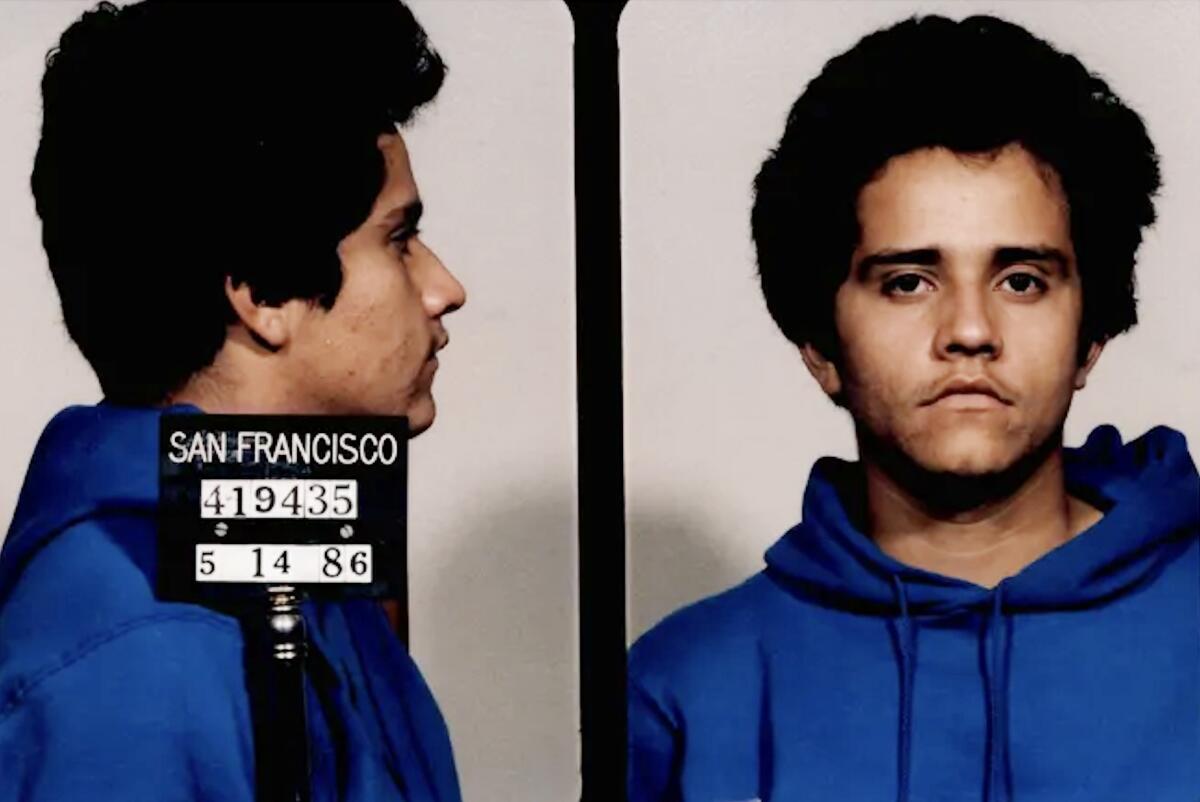
Oseguera was deported back to Mexico aged 30 and began to fully immerse himself in cartel activity. He worked for the Milenio Cartel, based out of his native Michoacán, and grew in stature and reputation as a calculating and cruel boss.He was ideally placed when the cartel fractured and, from its remnants, the CJNG sprang up with El Mencho at its head.Through a combination of territorial expansion and the nimbleness to pivot the cartel's activity into new and lucrative illegal activities, he turned the group into what it has become today – arguably the predominant criminal force in Mexico.His leadership and his cartel benefitted from the co llapse of the Sinaloa Cartel after the extradition of its leader, Joaquín "El Chapo" Guzmán, to the US. Subsequent battles between warring factions in Sinaloa have ultimately torn the group apart.The New Generation Cartel was on hand to hoover up an important portion of the fentanyl trade after the fall of El Chapo's sons. One of them, Joaquín Guzmán López, handed himself in to the US authorities and brought down his group's biggest rival, Ismael "El Mayo" Zambada, with him.El Mencho was a clear beneficiary of the vacuum and the dramatic sequence of events in Sinaloa. But, as is so often the case in Mexican drug crime, it was not a crown he wore for long.
The government of Mexico's President Claudia Sheinbaum will portray the removal of one of the country's most wanted men as a victory and this will be echoed in Washington. It shows progress on the main issue from which US President Donald Trump has demanded action from Mexico after immigration: fentanyl trafficking.Given the element of US intelligence apparently involved, it also underlines the Sheinbaum administration's willingness to work together with Washington in pursuit of the same goals. She would hope it will be enough to stave off any further talk of the need for unilateral US military action on Mexican soil in the form of drone strikes or boots on the ground – something which some in the Republican Party and in the Trump administration have openly called for.
Such discussions are still to come. For the time being, Mexicans are still processing that El Mencho is dead, and in his absence watching cartel members set fires in the streets in cities across the nation.Calm is slowly being restored in Mexico after the killing of feared drug lord Nemesio “El Mencho” Oseguera Cervantes sparked violence by suspected gang members, putting the country on edge as travel stalled and shelter-in-place warnings issued.“Peace, security and normalcy are being maintained” in Mexico, Mexican President Claudia Sheinbaum said, adding that the “most important thing right now is to guarantee peace and security for the entire population.”
Oseguera, who led the Jalisco New Generation Cartel (CJNG), died after being wounded during a military raid in Tapalpa targeting him on Sunday.
USA News Headlines
- Death toll mounts: Twenty-five members of Mexico’s National Guard are among those who died in clashes in Jalisco state, Mexico’s security secretary Omar García Harfuch said on Monday. Eight members of the CJNG cartel were killed in the military operation, Mexican Defense Secretary General Ricardo Trevilla Trejo said.
- Attack details revealed: The investigation into the network of “El Mencho” led to a key person with access to his hideout. That person was a “trusted man” of one of his lovers, Trevilla said. Read more about how it unfolded.
- US role: American support allowed Mexican authorities to “dismantle” Oseguera’s information networks, Trevilla said. The White House had said earlier that the US provided intelligence support for the operation.
- Uneasy return to calm: Trevilla said “normality was reinstalled” after military personnel were deployed, with 2,500 troops deployed to Jalisco and neighboring states. But some services and daily activities are still disrupted.
- Travelers stranded: The US State Department urged Americans to continue “sheltering in place” in certain states as other parts of the country return to “normal.” The department’s 24/7 crisis hotline for US citizens fielded hundreds of calls after several US carriers suspended flights to Puerto Vallarta.
Posted on 2026/02/27 09:47 AM