

How to Apply Online USA Citizenship?
Become a U.S. citizen through naturalization
Naturalization is the process of voluntarily becoming a United States citizen. Learn about the steps that lead to U.S. citizenship, incl uding the naturalization test.
What are the requirements for U.S. citizenship?
To be eligible for U.S. citizenship, you must meet certain eligibility requirements. These include being:
At least 18 years old when you apply
Able to read, write, and speak basic English (depending on age)
Of good moral character
How to apply for U.S. citizenship
Follow the 10-step naturalization process from the U.S. Citizenship and Immigration Services (USCIS). You will learn:
If you are eligible for naturalization
How to fill out Form N-400 to apply for naturalization
What to do before taking the oath of citizenship
How long does the naturalization process take?
Once you submit Form N-400, the amount of time it takes to become a naturalized U.S. citizen can depend on your location. You can check your case's estimated processing time by selecting the: Form you submitted (Form N-400 if you are applying for naturalization) Form category Field office or service center that is processing your case
Prepare for your interview and citizenship test
This video shows you what takes place during a naturalization interview and helps you prepare for it.For most people, one of the requirements during the interview is taking the 2008 U.S. naturalization test. The test has two parts: a civics test (U.S. history and government) and an English test.
Find study resources for the test:
100 Civics Questions and Answers for the 2008 Test (with MP3 audio)
2008 Civics Practice Test
Find out about ways to learn English
If you meet certain age or disability qualifications, you may not have to take the civics or English test. Find out who may be exempt from the civics or English sections of the test

Proving U.S. citizenship
Learn how to get a Certificate of Citizenship or Naturalization. Or prove your U.S. citizenship without a birth certificate if you were born outside the U.S. to a U.S. citizen.Get or replace a Certificate of Citizenship or a Certificate of Naturalization
Certificates of Citizenship and Naturalization show proof that someone is a U.S. citizen. Learn how you can get or replace these documents.Prove your citizenship: born outside the U.S. to a U.S. citizen parent
Learn how to prove your U.S. citizenship if you were born without documentation outside the U.S. to a parent who was a U.S. citizen.Prove your citizenship: born in the U.S. with no birth certificate
If you were born in the U.S. and have no birth certificate, learn how to get documentation to prove you are a U.S. citizen.How to get dual citizenship or nationality
Having dual citizenship, also known as dual nationality, means being a citizen of the United States and another country at the same time.
Learn about the requirements for dual citizenship
Whether you were born an American citizen or became one through naturalization, if you have dual citizenship, you:Owe allegiance to both the U.S. and a foreign country
Must use a U.S. passport to enter and leave the U.S.
Do not have to choose one nationality over the other. As a U.S. citizen, you may naturalize in another country without risking your U.S. citizenship.
Learn more about dual citizenship or nationality.
Get dual citizenship
Your eligibility to become a dual citizen depends on the policies of the second country where you are applying for citizenship.Dual citizenship if you are a citizen of another country
Some countries allow people to keep their citizenship after becoming U.S. citizens, while others do not.Contact the other country’s embassy or consulate to find out if they recognize dual U.S. citizenship.If you qualify for dual citizenship, you must first immigrate to the U.S. Then you must become a permanent U.S. resident before being eligible for U.S. citizenship. Learn more about immigrating to the U.S. And find out how to become a permanent resident.
Dual citizenship if you are a U.S. citizen
If you are a U.S. citizen who is seeking dual citizenship, you must find out if the other country recognizes dual citizenship with the United States.Contact the other country's embassy or consulate to learn if you are eligible.
Citizenship Resource Center
The Citizenship Resource Center has a collection of helpful resources and free study materials for a variety of users including:Immigrants who are interested in becoming U.S. citizens. Lawful permanent residents (LPRs) will find information about the naturalization process, eligibility requirements, and study materials to prepare for the naturalization interview and test.
Educators who play a critical role in preparing learners. Educators including teachers, volunteers, and program administrators will find several resources for the classroom. Educators can also search for free USCIS training seminars designed to enhance the skills needed to teach U.S. history, civics, and the naturalization process to immigrant students.
Organizations that are interested in supporting immigrants in becoming citizens and assisting them to assimilate into American civic society. Whether an organization is just beginning to help immigrants on their journey towards citizenship or is an experienced service provider, they will find resources to help enhance their overall efforts and programs.
Apply for Citizenship
As a lawful permanent resident, you may be eligible to become a U.S. citizen through naturalization. Check your eligibility for naturalization.Here’s how to start your naturalization application now:Consider contacting an authorized immigrant legal service provider for advice, which may be provided for free or at a low cost.
Create an account at myaccount.uscis.gov
Prepare your Form N-400, Application for Naturalization, and submit your application!
Apply for Naturalization
The benefits of being a U.S. citizen include:The right to remain in the United States as a United States Citizen;
Eligibility for a U.S. passport to travel internationally;
The right to vote, hold elected office, and apply for certain federal and state jobs;
Avoiding green card renewal fees and saving up to $465 per Green Card renewal application;
More options when petitioning to bring family members permanently to the United States; and
The opportunity for citizenship for your LPR children under 18 years of age.
Form N-400 Filing Fees Fact Sheet
Learn about changes in fees, eligibility for fee waivers, and reduced fees for Form N-400, Application for Naturalization.

U.S. Citizenship Laws and Policy
This webpage includes links to pages that have more information on obtaining or losing U.S. citizenship.
Acquisition of Citizenship
You may obtain U.S. citizenship at birth or through naturalization. If you were born outside of the United States, you may obtain U.S. citizenship under certain circumstances.
Obtaining U.S. Citizenship for a Child Born Abroad to a Surrogate Information on DNA Testing and Citizenship Acquisition of U.S. Citizenship at Birth by a Child Born Abroad Obtaining U.S. Citizenship Under the Child Citizenship Act Loss of Citizenship and Nationality A U.S. citizen by birth or naturalization INA 301 (8 U.S.C. 1401), INA 310 (8 U.S.C. 1421) or a U.S. noncitizen national INA 308 (8 U.S.C. 1408), INA 101(29) (8 U.S.C. 1101(29)) may relinquish U.S. nationality by performing a potentially expatriating act as defined in INA 349 (8 U.S.C. 1481), or predecessor statute, but only if the act is performed (1) voluntarily and (2) with the intention of relinquishing U.S. citizenship. The U.S. Supreme Court has spoken (Afroyim v. Rusk, 387 U.S. 253 (1967) and Vance v. Terrazas, 444 U.S. 252 (1980)): a person cannot lose U.S. nationality unless he or she voluntarily relinquishes that status.
Renunciation of U.S. Nationality
Renunciation of U.S. Nationality by Persons Claiming a Right of Residence in the U.S.
Possible Loss of U.S. Nationality and Dual Nationality
Possible Loss of U.S. Nationality and Foreign Military Service
Possible Loss of U.S. Nationality and Seeking Public Office in a Foreign State
Administrative Review of Loss of Nationality Determination
Other Citizenship and Nationality Links
Certificates of Non Citizen Nationality
Dual Nationality
What Is Naturalization?
Naturalization is the process through which an immigrant to the United States of America can become a U.S. citizen. Only certain immigrants are eligible: those who either have been green card holders (permanent residents) for 3–5 years or meet various military service requirements.
Is naturalization the same as citizenship?
Naturalization and citizenship are related but not exactly the same.
Citizenship refers to the status of being a recognized member of a country, either by birth or through other means.
Naturalization is the process by which a non-citizen can become a citizen after meeting specific legal requirements, such as residency, language proficiency, and passing a citizenship test. So, while naturalization leads to citizenship, it is the process of acquiring it rather than the status itself.
Becoming an American citizen comes with many advantages, and it also means taking on new responsibilities.
How Long Does it Take to Get Citizenship in the U.S.?
From the time you file your citizenship application to when you attend the Oath of Allegiance ceremony, is currently 5.5 months. Learn more about how long it takes to get citizenship after applying.
What is the fastest way to naturalize?
The quickest path to U.S. citizenship is marrying a U.S. citizen. If you’re a green card holder married to a U.S. citizen, you can apply for naturalization after just three years of permanent residency instead of the usual five. Members of the U.S. armed forces may also qualify for expedited naturalization, sometimes waiving the residency requirements entirely.
If you’re a green card holder with no special circumstances, you can apply for United States citizenship at least five years after obtaining your green card. You also must have physically lived in the U.S. for at least 30 months (two-and-a-half years) out of those five years.
If you’ve been married to a U.S. citizen for at least three years and lived with your spouse that entire time, you can apply to become a United States citizen at least three years after obtaining your green card. You also must have physically lived in the United States for at least 18 months (one-and-a-half years) out of those three years, and your spouse must have been a U.S. citizen for at least three years.
If you’re the widow or widower of a U.S. citizen who died while honorably serving in the U.S. military (and you were living with them at the time of their death), you can apply for U.S. citizenship at any time — as long as you’re a green card holder at the time of your citizenship interview. You need not have held a green card for a certain number of years or have physically lived in the United States for any number of months prior to applying.

If you’ve served in the U.S. military for at least one year during peacetime, you can apply while in active duty or within six months of separating honorably from the military. You need not have held a green card for a certain number of years or have physically lived in the United States for any number of months prior to applying to become a naturalized citizen.
If you’ve served in the U.S. military for less than one year during peacetime, you can apply for U.S. citizenship five years after obtaining your green card (honorable service within this five-year period can count toward that required time, as well). You also must have physically lived in the United States for at least 30 months (or two-and-a-half years) out of those five years.
If you’ve served in the U.S. military for at least one year during peacetime and are filing after six months of separating honorably from the military, you can apply to become a United States citizen five years after obtaining your green card (honorable service within this five-year period can count toward that required time, as well). You also must have physically lived in the United States for at least 30 months (two-and-a-half years) out of those five years.
If you’ve served in the U.S. military for any period during wartime, you can apply anytime and need not be a green card holder. You (or your military spouse) must only have been physically present in the United States (including U.S. territories) or aboard a U.S. vessel when you enlisted, re-enlisted, extended your service, or were inducted into the military. You need not have held a green card for a certain number of years (if you have one) or have physically lived in the United States for any number of months prior to applying for citizenship.
You must be at least 18 years old.
You must have lived continuously in the United States as a green card holder for at least five years, or three years if married to a U.S. citizen.
You must have been a resident of the state where you plan to apply for citizenship for at least three months.
You must have “good moral character,” broadly defined as character that measures up to the standards of average citizens in your community. More specifically, however, it means you did not have certain types of crimes such as murder, illegal gambling, or intentionally lying to the U.S. government in order to gain immigration benefits — on your record at any time before filing, and you did not lie during your naturalization interview. Whether an applicant meets this requirement is decided by the government on a case-by-case basis.
You must pass a two-part naturalization test: the first is an English language test (covering reading, writing, and speaking skills) and the second a civics test (covering knowledge of U.S. history and government).
You must be willing to serve in the U.S. military or perform civilian service for the United States if called upon to do so.
You must register with the Selective Service System if you are male and have lived in the United States between the ages of 18 and 25.
The interview
The citizenship interview is usually scheduled around 14 months after filing your application. Exactly how long it will take to process your naturalization application, however, depends heavily on the USCIS field office handling your case, which is assigned to you based on your ZIP code.During the citizenship interview, a USCIS officer will verify that all of the information on your naturalization application is correct. The interview usually takes place at the nearest USCIS office. If you are applying from abroad, you will attend the interview at a U.S. embassy or consulate. If you are in active military duty, your interview may be held at a military facility.
The exam
The citizenship interview is also referred to as a citizenship “exam” because, at the same time, the USCIS officer will also give you a two-part naturalization test (unless you qualify for an exemption): The first component, an English language test, will evaluate your written and spoken English skills. The second, a civics test, will assess your knowledge of U.S. history and basic information about how the U.S. government works. (Check out our detailed guide to the naturalization exam, which includes helpful preparation tips, as well as our guide to the civics test questions.)
But don’t panic! These tests are fairly basic, and USCIS provides study materials to help you prepare. You’ll also have two chances to take the tests per application: once during your interview and again at a later date to retake any portion that you didn’t pass the first time.If you pass the interview and exam, the USCIS officer will approve your application at the end of the interview. In some cases, USCIS may ask you for additional documentation or schedule a second interview.If you do not pass, USCIS will send you a denial letter explaining why, but you may appeal their decision within 30 days of receiving the letter or reapply. A USCIS policy on denied applications taking effect on September 11, 2018 underscores the importance of completing the naturalization application and meeting all requirements correctly the first time.
Oath of Allegiance
You’re almost finished! Once your application is approved, you will attend an Oath of Allegiance ceremony. It’s very important that you complete this step. You are not a U.S. citizen until you have taken the Oath of Allegiance.After your citizenship interview, you’ll receive a notice in the mail with the date, time, and location of the ceremony (usually a local courthouse or USCIS office). The time it takes to schedule the ceremony varies by state.You’ll be asked to return your green card when you check in. Once the ceremony is over, you’ll receive a Certificate of Naturalization and begin your life as a U.S. citizen!Let Boundless be your immigration go-to, guaranteed approval or your money back. Learn more about what Boundless can do to help.
Benefits of Naturalization
Once you officially receive your Certificate of Naturalization and are a U.S. citizen, you’ll have access to a number of benefits that were previously unavailable to you as a green card holder. In this section, we’ll touch on a few of these.
Voting rights: As a green card holder, you may have been able to vote in certain local municipalities, but with a Certificate of Citizenship, you can make an impact on the national stage by casting your vote in federal elections.Eligibility to run for office: To be eligible for candidacy in U.S. elections, you must be a citizen, which means, with a Certificate of Naturalization, you can run for office.
No more immigration forms: Moving forward, you won’t need to go through the rigamarole of filing forms with USCIS. That means no more filing fees, no more green card renewals or replacements, and no more having to check in with the U.S. government whenever you decide you want to move.
New employment opportunities:Under U.S. law, only U.S. citizens may be hired to work for the U.S. government. While income levels vary, federal employees are generally paid more and have greater benefits than their private-sector counterparts.
Greater access to government assistance programs: As a green card holder, you have limited access — if any — to federal programs like Social Security and Medicare. But with a Certificate of Naturalization, you’ll no longer face these restrictions. You can even, in certain cases, apply for federal college assistance, which is reserved solely for U.S. citizens.
No more deportations: Just as with any U.S. citizen, you cannot be forcibly removed from the United States. This is true even if you’re convicted or arrested. A naturalized citizen can only be deported if they are first stripped of their citizenship — which is very rare. For this to occur, the initial application must have been fraudulent in some way.
Ability to sponsor relatives seeking immigration status: With a Certificate of Naturalization, you can sponsor any siblings, parents, or adult children who wish to apply for lawful permanent residence in the United States.
Automatic citizenship for children: Once you’re naturalized, your children will automatically obtain citizenship, even if they’re born abroad. If your child is born outside the United States, be sure to notify the U.S. embassy or consulate.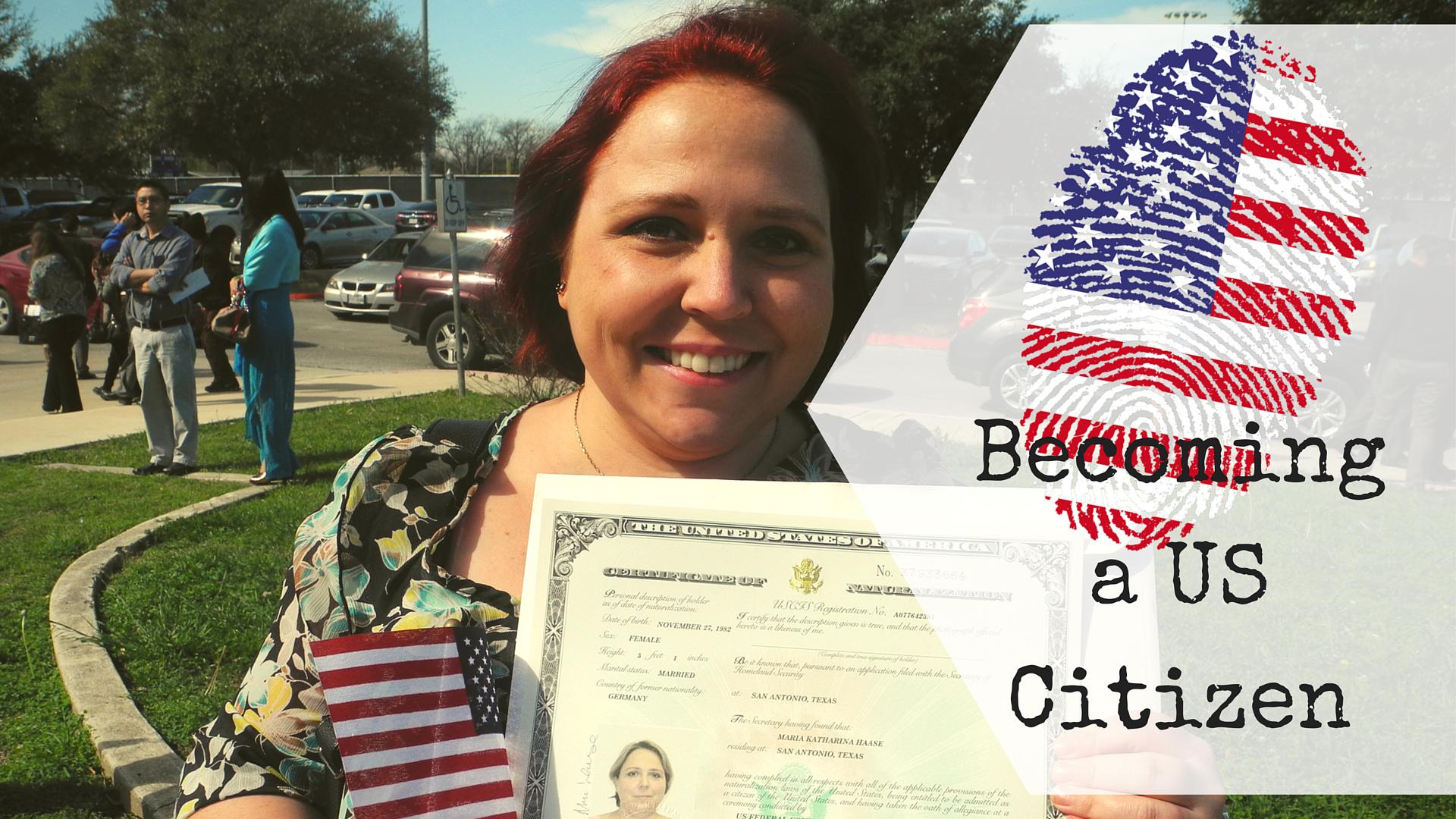
The power of the U.S. passport: As a citizen of the United States, you’re entitled to a U.S. passport, which comes with a number of benefits. For starters, you’ll have visa-free access to over 180 countries and territories throughout the world, and if, while abroad, you find yourself in an emergency, you’ll be able to contact the local U.S. consulate or embassy. You’ll also have near-complete freedom to travel the globe, as the U.S. government places no restrictions on the duration or frequency of trips abroad. (Note: it’s always a good idea to check the specific visa requirements for any given country before making travel arrangements.)
Special Considerations
Before you begin your journey toward U.S. citizenship, it’s important to understand the basic responsibilities of being an American citizen. Some of the most important duties include the following:
You may be required to renounce your citizenship in other countries. Depending on your home country’s rules for dual citizenship (being a citizen of two countries at the same time), you may need to give up your current citizenship upon becoming an American. The United States permits dual citizenship, but it requires U.S. nationals to use their U.S. passports when traveling in and out of the United States. Many countries Australia, Canada, and the United Kingdom, for instance — also allow you to be a national of another country. India, Japan, and a number of others, however, require you to relinquish your citizenship in those countries once you become an American. It’s best to check your home country’s policy on dual nationality before applying for naturalization if you intend to maintain your citizenship in that country.
You may be called upon to serve in the military. Mandatory military service enforced by a draft was officially discontinued in 1973. If reinstated, however, you could be drafted to serve. Any male who is a U.S. citizen or green card holder and has lived in the United States between the ages of 18 and 25 must register with the Selective Service System.
You may need to serve on a jury. In the United States, jury duty in a legal proceeding is mandatory. If summoned, you must attend, but you may not necessarily serve. Only those who are selected by the judge and attorneys after being summoned will actually serve on the jury. Active-duty military service members, professional fire and police department workers, and some public government officers who serve full time in their positions are exempted from federal jury duty. Individuals who have served on a federal jury in the past two years, are aged 71 and older, or are volunteer first responders generally may request to be excused from service, but policies vary by district court. State and local courts impose their own rules but generally also exempt individuals based on age, disability, or their positions in public office.
You must file U.S. income tax returns for life — no matter where you live. As a U.S. citizen, even if you move abroad, you must still file U.S. income tax returns. As long as you meet certain requirements, though, you’ll be able to exclude from your income up to the yearly limit — currently over $100,000 — allowed by the U.S. government, meaning it won’t be taxed. Any income that exceeds that limit will generally be taxed.
Your criminal history will be heavily scrutinized. If you’ve committed a crime that could make you deportable — such as immigration fraud, drug abuse, or domestic violence — it’s especially important to seek legal assistance before applying for naturalization.
Posted on 2025/07/16 09:35 PM